
Maritime Safety // Offshore & STS Operations
Transfer of Personnel by Crane Between Vessels (OCIMF): Guidance on Safe Crane Operations
Official recommendations published by the Oil Companies International Marine Forum (OCIMF) on safe personnel transfer between vessels utilizing shipboard cranes and specialized carriers (Billy Pugh, Frog, Wave). Covers operational precautions, environmental limits, risk assessments, and checklists for offshore and ship-to-ship (STS) lightering operations.
About the Guidelines: Managing Critical Risks in Open-Sea Personnel Transfers
Transferring crew, pilots, cargo expediters, and technicians between vessels offshore ranks among the most safety-critical evolutions in the offshore energy sector and during Ship-to-Ship (STS) lightering operations. Unpredictable swell, differential vessel roll and pitch, sudden wind gusts, and changing relative motion between floating hulls introduce severe hazards of crushing, falling from height, or carrier impacts against deck structures.
“Transfer of Personnel by Crane Between Vessels” by OCIMF was developed to standardize marine transfer procedures and eliminate casualties. The document establishes clear demarcations of responsibility among both shipmasters, crane operators, deck riggers, and riding personnel. Critically, OCIMF emphasizes that transferring people by crane must always be categorized as a high-risk activity and performed only after considering alternative boarding systems (such as accommodation ladders, motion-compensated gangways, or helicopters).
To support offshore operations, teams should also review our guidance on Shipboard Crane Operator Certification, conduct a documented pre-job briefing with our Online Marine Risk Assessment Tool, and verify pilot boarding arrangements in our guide to Marine Pilotage Procedures & Safety.
Key Operational Aspects & OCIMF Requirements:
1. Lifting Gear, Cranes & Transfer Equipment:
- Crane Certification: Purpose-rated certification for man-riding operations, enhanced safety factors (minimum 5:1), dual fail-safe brake systems, and emergency lowering functions.
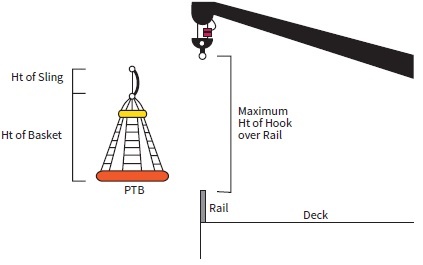
- Personnel Transfer Carriers: Traditional collapsible netted baskets (Billy Pugh), rigid protective seated capsules (Frog), and advanced torso-supported carriers (Wave).
- Rigging & Slings: Regular inspection of master links, certified wire bridles, rated safety shackles, and swivels to prevent load spinning.
- Designated Landing Areas: Clear, non-skid deck zones on both vessels free from tripping hazards, manifolds, or overhead deck obstructions, supported by adequate lighting.
2. Operational Safeguards & Human Factors:
- Toolbox Talk & Risk Assessment: Mandatory pre-operation briefing, mutual consent of both masters, dedicated VHF working channels, and agreed crane hand signals.
- Environmental Limits: Enforcing strict operational limits for significant wave height, ship motions, and wind speeds (typically not exceeding 20–25 knots) with good visibility.
- PPE & Baggage Protocols: Compulsory automatic inflatable lifejackets, safety helmets, non-skid footwear, and zero hand baggage during transit (luggage lifted in separate cargo nets).
- Emergency Preparedness (MOB): Dedicated rescue boat on standby, lifebuoy with self-igniting light ready at the rail, and continuous deck lookout throughout each lift.
Download “Transfer of Personnel by Crane Between Vessels”
Official OCIMF guidelines featuring operational checklists, rigging diagrams, and safety parameters in PDF format:
OCIMF Guidelines
Transfer of Personnel by Crane Between Vessels