
Officer of the Watch Actions in a Man Overboard (MOB) Situation
A Man Overboard (MOB) situation is one of the most critical and time-sensitive emergencies on the navigational bridge. The actions taken by the Officer of the Watch (OOW) within the first 15–30 seconds directly determine the victim’s survival and will undergo rigorous scrutiny during any subsequent maritime investigation or court inquiry.

1. Hazards of Falling Overboard & IAMSAR Incident Classification
Falling overboard from a merchant vessel is a life-threatening crisis with low statistical survival rates. The initial impact with the sea surface from significant freeboard heights (common on ballast bulk carriers and large container vessels) can cause severe trauma or unconsciousness. Furthermore, deadly physical factors take effect immediately:
- Hydrodynamic Suction & Propeller Strike: The powerful suction along the hull and the rotating propeller blades present an immediate fatal risk unless the stern is swung rapidly away from the casualty.
- Cold Shock Response & Hypothermia: Involuntary gasping and hyperventilation cause immediate water inhalation, followed by loss of physical coordination and hypothermia within minutes, even in moderate sea temperatures.
- Loss of Visual Contact: In sea states with wave heights exceeding 1.5–2 meters, a person’s head becomes practically invisible from the bridge wing beyond 1–2 cables.
IAMSAR Manual (Vol. III) Classification:
• Immediate Action: The casualty is sighted directly from the bridge, or reported immediately without delay.
• Delayed Action: The incident is reported to the bridge by an eyewitness after a lapse of time.
• Missing Person: A crew member is reported missing during watch handover or ship muster. This scenario initiates standard Search and Rescue (SAR) expanding square or parallel sweep patterns.
2. Bridge Familiarization & Immediate Response Readiness
When taking over navigational watches on a newly joined vessel, every deck officer must be familiar with emergency control locations without hesitation. If the «MAN OVER BOARD!» alarm is raised right now, can you immediately answer these 5 questions?
- Where is the override switch to change steering control from Auto to Manual (Hand) instantly?
- Where is the dedicated hardware MOB button located on the ECDIS units and primary GPS receivers?
- How are the ship whistle (tyfon) and general Public Address (PA) broadcast console activated immediately?
- How is the bridge-wing quick-release lifebuoy with self-igniting light and smoke signal deployed?
- What are the precise emergency muster duties for the bridge team and the designated Rescue Boat crew under the ship’s Muster List?
3. Man Overboard Recovery Manoeuvres: Principles and Execution
Nautical textbooks often cite numerous experimental maneuvers (Butakov, Anderson, double turn). However, international practical seamanship and the IAMSAR Manual focus on two standardized recovery turns based on the timing of the alert:
Williamson Turn — Immediate Action Immediate Action
The standard recovery manoeuvre designed to bring the ship back along its original reciprocal track line. Highly reliable in good and reduced visibility conditions when the casualty is sighted immediately.
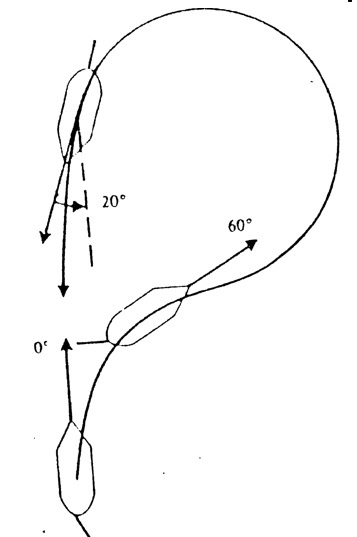
- Rudder hard over to the side of the casualty: Switch steering instantly to Manual. Note the initial heading. Add 60° (for starboard turn) or subtract 60° (for port turn).
- Release Bridge Wing Lifebuoy (MOB Marker): Deploy the bridge-wing lifebuoy with smoke and light marker. This serves as an immediate visual datum and physical float for the victim.
- Press the MOB button on ECDIS and GPS: Lock the electronic geographical coordinates of the incident to monitor wind and current drift vectors accurately.
- Sound the General Alarm & Broadcast: Sound three long blasts on the ship’s whistle (Morse code «Oscar») and announce via PA system: «MAN OVERBOARD! STARBOARD SIDE! ALL HANDS TO RESCUE STATIONS!»
- Rudder hard over to opposite side at 60° deviation: As the ship swings through 60° from the original heading, reverse the helm to the opposite side. Compute the reciprocal heading (Initial Heading ± 180°). Begin checking the swing approximately 20° before reaching the reciprocal course.
- Steady on reciprocal course (Midships): Settle onto the reciprocal track line heading back towards the datum point. Notify the Engine Control Room (ECR) to place engines on manoeuvring mode and reduce speed appropriately.
- Brief the Master upon arrival on the bridge: Hand over conn with a concise briefing: casualty location, weather/current drift conditions, and current manoeuvre phase.
- Transmit Urgency Message (VHF Ch. 16): Broadcast a PAN-PAN (or MAYDAY depending on severity) message to warn surrounding traffic, especially vessels directly astern in your wake.
- Hoist Flag «OSCAR» by day: (or illuminate two all-round red lights if unable to manoeuvre by night) and muster the dedicated Rescue Boat crew for lowering.
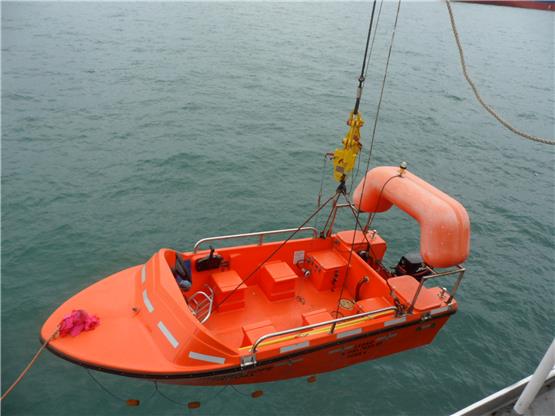
Bridge reference resource: Download Williamson Turn Bridge Poster (DOCX)
Scharnow Turn — Delayed Action Delayed Action
Used when a man overboard report is received with delay, the vessel has already steamed a considerable distance ahead, and the goal is to return directly into the original wake line behind the vessel.

- 1) Rudder hard over to either side (depending on traffic, wind, and navigational hazards).
- 2) Deviate 240° from original course.
- 3) Rudder hard over to the opposite side.
- 4) Steady up 20° before reciprocal course.
- 5) Steer reciprocal course into the original wake path.
⚠️ Manoeuvring Limitation: The Scharnow Turn must NOT be used for Immediate Action scenarios because the turning circle cuts across the ship’s own wake astern, where the casualty is still located!
4. Navigational Constraints, Hydrodynamics, and Sea Traffic
No matter how desperate the situation appears, executing a radical rudder movement without evaluating surroundings can create a secondary disaster. Before ordering hard over, assess:
- Vessels in Wake & Traffic Density: Initiating an abrupt 60° to 240° swing in a Traffic Separation Scheme (TSS) or congested strait without an urgent warning on VHF Ch. 16 poses an acute risk of collision.
- Shallow Water Effect & Under-Keel Clearance (UKC): In shallow water, a vessel’s tactical diameter expands significantly, turning ability decreases, and hydrodynamic squat / heel increases dynamic draft at the bilge. Confirm safe water depth before swinging.
- Wind & Swell Orientation: When positioning the vessel for rescue boat deployment, ensure you create a sheltered lee side to protect the launching crew and boat.
5. Operational Tips for the Watchkeeping Officer
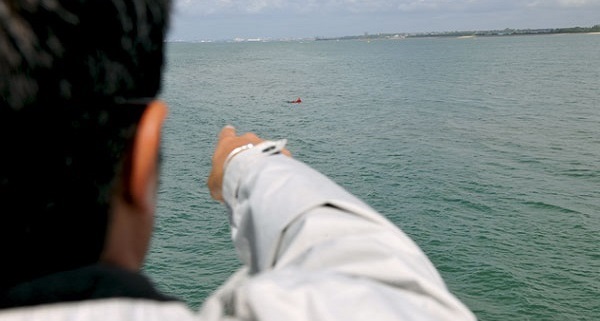
- Uninterrupted Visual Pointing: Any crew member who sights a person overboard must release the nearest lifebuoy and continuously point with an outstretched arm directly at the person in the water without looking away for even a single second.
- Engage Both Steering Gear Power Units: Prior to radical emergency manoeuvring, start the second steering gear hydraulic pump unit to achieve maximum rudder response speed (SOLAS standard requirement).
- Study the Wheelhouse Poster: Know your vessel’s advance, transfer, and tactical diameter in advance under both laden and ballast conditions.
- Log Exact Time of Incident: If visual contact is lost, exact timing allows the OOW to calculate environmental drift based on current and leeway vectors.
- Flag OSCAR: Display International Code Flag «O» on the halyard on the side of manoeuvring during daylight.
- Explore related navigation guides: Bridge Workspace & Marine Tools, and review the International Maritime Conventions & Rules.
«A seaman is called a human being only once — and that is when he is overboard…»
© NavLib — Maritime Electronic Library. Bridge Resource Guide: «Officer of the Watch Actions in Man Overboard (MOB) Emergencies».