
Maritime Safety // SOLAS & LSA
Cold Water Survival: Official IMO Guidance, Immersion Stages, HELP / Huddle Postures, and First Aid Protocols
International Maritime Organization (IMO) statutory survival and medical recommendations for vessel abandonment and man-overboard scenarios in cold waters. Physiological heat loss mechanisms, the four fatal stages of cold immersion, heat preservation tactics in water, horizontal retrieval techniques, and first aid treatment to prevent circum-rescue collapse.
1. Thermoregulation Physiology: Why Cold Water Kills Far Faster Than Air
The human body regulates its internal core temperature within a narrow window around 37°C. Water has a thermal conductivity approximately 25 times higher than air at equivalent temperatures. When immersed in water cooler than 15°C, thermal energy is conducted away from vital organs at a rate that far outpaces metabolic heat generation, even with maximum shivering response.
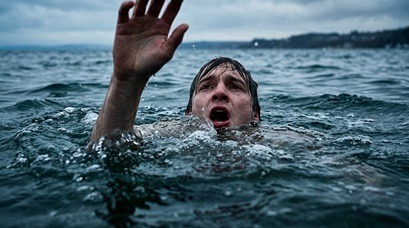
A widespread misconception is that immersion casualties die almost instantaneously from hypothermia. Medical research compiled by the IMO demonstrates that true deep hypothermia takes anywhere from 30 minutes to several hours to develop in clothed adults. Most fatalities occurring within the initial 10 to 15 minutes result from cold shock, hyperventilation, and physical incapacitation leading to secondary drowning, rather than lethal core cooling.
Understanding these physiological hurdles is critical when executing prompt bridge maneuvers outlined in our guide on Man Overboard (MOB) bridge actions and maneuvers.
2. The Four Stages of Cold Water Immersion (IMO Classification)
Under IMO Circular MSC.1/Circ.1185, a survivor faces four chronological physiological threats:
Rapid cooling of cutaneous thermoreceptors triggers an immediate, involuntary inspiratory gasp, followed by massive hyperventilation where breathing rates surge fourfold. Inhaling just 1.5 to 2.0 liters of water during this gasp response is sufficient to cause immediate drowning if the mouth is submerged.
Severe peripheral vasoconstriction simultaneously causes a sudden spike in blood pressure and heart rate, presenting an acute risk of cardiac arrest or ventricular fibrillation even in healthy seafarers.
The body prioritizes core survival by shutting down blood supply to superficial tissues and skeletal muscles in the limbs. As nerves and arm muscles cool, fine motor skills disappear: victims can no longer operate flares, don lifejackets, or grasp rescue strops.
Swimming coordination collapses rapidly. Without a properly fitted lifejacket keeping the airway clear of water, the casualty drowns due to physical exhaustion long before hypothermia sets in.
Continuous conductive heat loss drives core body temperature below 35°C:
- Mild (35–34°C): violent involuntary shivering, disorientation, apathy, and impaired speech.
- Moderate (33–30°C): shivering ceases, muscle rigidity develops, consciousness clouds, and pulse weakens drastically.
- Severe (< 30°C): unconsciousness, dilated pupils, profound bradycardia, cardiac dysrhythmias, and apparent clinical death.
Up to 20% of immersion deaths occur just prior to rescue, during hoist operations, or shortly after arriving on deck. Removing hydrostatic pressure during vertical extraction causes venous pooling, cardiovascular collapse, and the circulation of chilled, acidotic peripheral blood back into the cardiac ventricle (“afterdrop”).
3. Vessel Abandonment: Thermal Protection Equipment
Survival in cold seas is largely decided before entering the water. When the general emergency alarm sounds and the Master orders abandonment:
| Protective Equipment | Operational Function & Heat Preservation Role |
|---|---|
| Layered Wool or Synthetic Clothing | Don multiple layers of woolen or fleece garments beneath survival gear. Wool traps air and maintains roughly 70% of its insulating capacity when wet. Always protect the head and neck, through which substantial bodily heat can escape. |
| Windproof Outerwear | A tightly woven outer shell with secured wrists, neck, and ankles traps a stagnant film of water against the skin, minimizing cold water flush cycles that drain thermal energy. |
| Immersion Suit (SOLAS Approved) | Don over warm clothing. Ensure the waterproof zipper is pulled completely up to the chin and the face flap is secured snugly to minimize water ingress. |
| SOLAS Lifejacket | Must be donned over clothing or non-buoyant immersion suits. Guarantees positive self-righting to maintain the airway at least 120 mm above water, even if unconscious. Always buckle crotch straps! |
Board survival craft directly from davits or embarkation stations dry-shod. If jumping is unavoidable, jump vertically feet-first with legs clamped together. Cover your mouth and nose with one gloved hand and lock your other arm firmly over your lifejacket collar to prevent neck injury or jaw fracture upon impact.
4. In-Water Preservation Tactics: Slowing Down Heat Loss
Once immersed without immediate access to a liferaft:
- Manage Initial Panic: Focus entirely on steadying your breathing during the first 60–90 seconds. Keep your mouth closed against spray. The gasping reflex subsides once cold shock passes.
- DO NOT SWIM UNLESS ABSOLUTELY NECESSARY: Unnecessary swimming accelerates body heat loss by 30% to 50%. Active muscular movement forces warm core blood into chilled extremities and breaks the warm insulating layer of water trapped inside clothing. Remain still unless a rescue craft or floating object is within immediate reach.
- Adopt the HELP Posture: For solitary survivors wearing lifejackets. Pull knees up to the chest, cross ankles, clamp elbows tightly against your ribs, and wrap your arms across your chest. This shields key high-loss vascular zones: the groin, armpits, and lateral chest wall.
- Form the HUDDLE Position: For two or more survivors. Press torsos tightly together in a circle, wrap arms around each other’s shoulders or waists, and place weaker individuals or non-swimmers in the middle. This cuts group heat loss substantially and presents a larger visual target for SAR aircraft.
Training requirements for shipboard safety equipment can be referenced in our overview of STCW Convention Manila Amendments and navigational emergency checklists.
5. Safe Extraction and Shipboard Medical Protocols
Inappropriate handling during rescue and resuscitation often causes fatal outcomes in viable hypothermic casualties. IMO Circular MSC.1/Circ.1185 mandates strict operational standards:
• Vertical Hoisting: Never haul a casualty vertically out of the sea via a single chest strop. Survivors must be lifted in a horizontal or near-horizontal posture (using rescue baskets, scoops, or dual-sling strops under the knees and chest) to prevent fatal venous pooling and cardiac arrest.
• Active Limb Rubbing: Never massage or rub cold arms and legs. Massaging forces stagnant, cold, acidic blood directly into the heart, causing ventricular fibrillation.
• Hot Showers or Rapid Reheating: Placing a hypothermic patient in hot water causes severe peripheral vasodilation, precipitating irreversible circulatory shock.
• Alcohol or Stimulants: Never administer alcohol or caffeinated beverages. Alcohol promotes peripheral heat dump, accelerating core cooling.
Shipboard First Aid Treatment:
- Gentle Handling: Keep the casualty horizontal on a stretcher. Rough physical handling or jarring can trigger fatal arrhythmias in an irritable, hypothermic myocardium.
- Insulate and Cut Away Wet Layers: Cut wet clothing off gently rather than forcing stiff limbs. Wrap the casualty in dry blankets and place them inside a Thermal Protective Aid (TPA).
- Passive Slow Rewarming: Allow the patient to rewarm using their own metabolic output in a warm, draft-free room. External heat sources should be applied strictly to the trunk (neck, chest, groin, axillae), never to the arms or legs.
- Conscious Casualties: Provide warm, sweetened fluids in modest sips.
- Unconscious Casualties: Maintain airway in the recovery position. If there is no breathing or carotid pulse, initiate Cardiopulmonary Resuscitation (CPR) without delay. Remember the maritime medical maxim: “A patient is not dead until they are warm and dead”.