
STCW Convention: Complete Guide to Seafarer Certification, Watchkeeping & Manila Amendments
The International Convention on Standards of Training, Certification and Watchkeeping for Seafarers (STCW) is the cornerstone of global maritime labor standards. It sets the qualification thresholds for all crew members from Ordinary Seaman to Master Mariner. Below is a structured examination of the convention structure, certification routes, watchkeeping requirements, and downloadable official IMO guides.
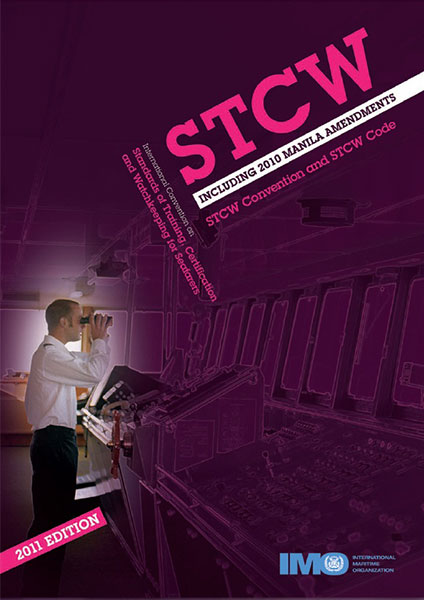
What is the STCW Convention and Where Does it Apply?
Adopted by the International Maritime Organization (IMO) in London in 1978 and entering into force in 1984, the STCW Convention established international qualification benchmarks for merchant marine personnel. Prior to this landmark convention, each national maritime administration established its own training curricula and certification criteria, resulting in dangerous discrepancies on the bridge and in engine rooms with multinational crews.
Major overhauls were enacted in 1995 (STCW-95) and subsequently in 2010 through the comprehensive Manila Amendments. The convention places legal obligations on seafarers, shipowners, training institutions, and Flag State administrations.
Applies to Masters, Officers, and Ratings serving on commercial ocean-going vessels flying the flag of a signatory State (typically vessels of 500 GT or more).
Does not apply to naval warships, naval auxiliaries, fishing vessels (governed separately by STCW-F), non-commercial pleasure yachts, or wooden ships of primitive build.
Legal Architecture: Articles, Annex & STCW Code
The document is divided into the legal treaty framework and the technical operational requirements under the STCW Code:
- Articles of the Convention: Establish overarching legal duties, Port State Control (PSC) verification rights, communication procedures, and mutual recognition of Certificates of Competency (CoC).
- Convention Annex: Technical regulations organized systematically into chapters.
- STCW Code — Part A (Mandatory): Sets minimum mandatory standards of competence through detailed Knowledge, Understanding, and Proficiency (KUP) tables and assessment criteria.
- STCW Code — Part B (Non-Mandatory Guidance): Recommended guidelines designed to assist Flag Administrations and educators in harmonizing practical application.
Chapters of the STCW Convention:
The 2010 Manila Amendments: Key Industry Reforms
The 2010 Manila Conference modernised the convention to align with contemporary shipboard technologies and harmonized rest period requirements with the Maritime Labour Convention (MLC 2006). Key operational changes include:
Established formal qualification standards for Electro-Technical Officers (ETO, Reg. III/6) and Electro-Technical Ratings (ETR, Reg. III/7).
Electronic Chart Display and Information Systems (Generic IMO Model Course 1.27 + Type-Specific training) became compulsory for deck officer certificate renewal.
Mandatory practical refresher courses every five years for Basic Safety Training (BST), Survival Craft (PSCRB), Fast Rescue Boats (FRB), and Advanced Firefighting (AFF).
A minimum of 10 hours of rest in any 24-hour period, and not less than 77 hours in any 7-day period. Rest hours cannot be split into more than two periods, one of which must be at least 6 consecutive hours.
Mandatory certification for all seafarers in Security Awareness (Reg. VI/6-1) and Designated Security Duties (DSD, Reg. VI/6-2) in accordance with the ISPS Code.
Certification for crew on LNG/low-flashpoint fuel vessels under the IGF Code, plus specialized ice-navigation training for ships operating under the Polar Code.

Levels of Responsibility & Rank Breakdown
STCW categorizes all vessel duties into three progressive tiers: Management Level, Operational Level, and Support Level.
• Officer in Charge of a Navigational Watch (OICNW): Operational Level (Reg. II/1). Radar/ARPA, ECDIS navigation, COLREG-72 collision avoidance, and GMDSS GOC operator certification.
• Able Seafarer Deck: Support Level (Reg. II/5). Mooring, cargo handling, survival craft operations, and bridge lookout support.
• Rating Forming Part of a Navigational Watch (RFPNW): Support Level (Reg. II/4). Steering watch with standard IMO SMCP helm commands.
• Officer in Charge of an Engineering Watch (OICEW): Operational Level (Reg. III/1). Diesel plant maintenance, auxiliary boilers, bilge/ballast pumping, and watch handover.
• Electro-Technical Officer (ETO): Operational Level (Reg. III/6). High-voltage switchboards, bridge automation, propulsion electronics, and radio maintenance.
• Able Seafarer Engine & Rating Forming Part of an Engineering Watch (RFPEW): Support Level (Reg. III/4 & III/5). Fuel bunkering, machinery cleaning, and routine engine checks.
Official English STCW Manuals & Guidelines for Download
Access the complete IMO STCW Code 2010 edition, alongside comprehensive ITF Seafarers’ Trust practical handbooks detailing career paths, sea service benchmarks, and endorsement checklists.
IMO STCW Code 2010 (Manila Amendments)
STCW-95 / 2010: A Guide for Seafarers (Revised)
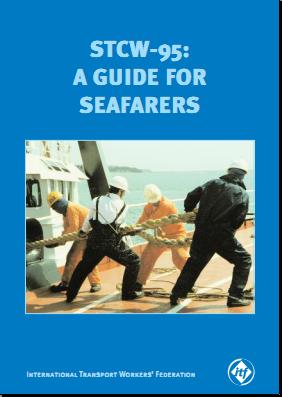
STCW-95: A Guide for Seafarers (2nd Edition)
Frequently Asked Questions (STCW FAQ)
What is the validity period of an STCW Certificate of Competency (CoC)?
Certificates of Competency (CoC) and Flag State Endorsements are issued for a maximum duration of 5 years. Revalidation requires documented qualifying sea service (at least 12 months within the preceding 5 years, or 3 months within the preceding 6 months) alongside up-to-date mandatory refresher certificates.
Which safety certificates require mandatory refresher training every 5 years?
Under the Manila Amendments, practical assessment refreshers every five years are mandatory for: Basic Safety Training (Reg. VI/1), Proficiency in Survival Craft and Rescue Boats (Reg. VI/2-1), Fast Rescue Boats (Reg. VI/2-2), and Advanced Firefighting (Reg. VI/3).
What is the difference between a CoC and a CoP?
A Certificate of Competency (CoC) is an official license allowing an officer to serve in a specific rank (Master, Chief Engineer, Watchkeeper). A Certificate of Proficiency (CoP) verifies specialized training for specific tasks or ship types (e.g., Tanker endorsement, Medical care, Security duties, Survival craft).