
Top 10 Largest Flag States in the Global Shipping Industry
In the maritime sector, a Flag State refers to the country under whose laws a commercial vessel or pleasure craft is registered and licensed. Consequently, every registered ship is legally bound to fly the flag of that nation.
Following registration, the vessel is obligated to comply with the statutory rules, safety standards, and regulations set forth by that flag administration regarding legal jurisdiction, crew welfare, taxation, and international convention enforcement.
Below is a detailed overview of the world’s leading flag states shaping global maritime commerce.
1. Liberian International Ship & Corporate Registry (LISCR)
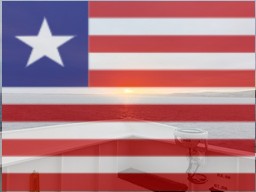
The Liberian Registry has overtaken Panama to become the world’s largest ship registry by gross tonnage. Combining rigorous safety standards for vessels and seafarers with responsive customer service for shipowners, Liberia has established itself as the fastest-growing flag state, accounting for over 271 million gross tons (GT) and representing approximately 16.39% of the global market share.
More than 5,000 vessels fly the Liberian flag. The country also boasts the world’s largest container fleet, representing over 23.37% of global container capacity, along with more than 15.25% of the world’s tanker fleet (by gross tonnage).
According to Clarkson’s World Fleet Monitor, Liberia has outpaced other open registries, driven by an influx of shipowners from Greece, Japan, China, Singapore, and the United States. Key factors behind this growth include remote survey capabilities, streamlined digital registration processes, strategic global offices in maritime hubs such as Oslo and Houston, and active participation in green technology partnerships, including hydrogen-fueled vessel initiatives.
2. Panama Maritime Authority (PMA)
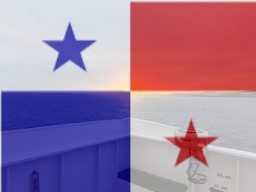 Strategically situated at the crossroads of the Pacific and Atlantic Oceans via the Panama Canal, Panama has historically been a maritime powerhouse and currently stands as the second-largest flag state in the world.
Operating as an open registry, Panama attracts international shipowners seeking operational flexibility, favorable tax regimes, and streamlined crew certification procedures. Approximately 14.55% of the world fleet sails under the Panamanian flag—a fleet volume exceeding the combined national merchant fleets of the US and China.
The Panama Maritime Authority continues to modernize its fleet governance by upgrading compliance policies, implementing digital certification platforms, enhancing cybersecurity protocols, and proactively deregistering substandard vessels to maintain compliance with international Port State Control (PSC) MoUs.
3. Republic of the Marshall Islands (IRI)
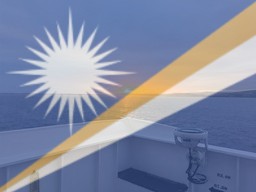 Administered by International Registries, Inc. (IRI), the Republic of the Marshall Islands ranks firmly among the top three registries globally in terms of gross tonnage, deadweight, and vessel count, commanding an 11.24% market share.
The Marshall Islands registry is highly favored by institutional owners and financial institutions due to its robust legal framework, low tax structure, and operational transparency. While it enforces strict age and technical parameters for bulk carriers and tankers, it accommodates all vessel types, including advanced offshore units and superyachts.
The Marshall Islands fleet is widely recognized as one of the youngest and greenest in the industry, consistently maintaining its coveted USCG QUALSHIP 21 status year after year. With a worldwide network of regional offices, IRI provides 24/7 technical and statutory support.
4. Hong Kong Shipping Register (HKSR)
 Operating under the Marine Department of the Government of the Hong Kong Special Administrative Region, the Hong Kong Shipping Register holds a 7.89% market share, representing over 130 million gross tons across a fleet of more than 2,700 merchant vessels.
HKSR is renowned for high quality and operational integrity, consistently ranking on the White Lists of both the Paris and Tokyo Memoranda of Understanding (MoU). To support international shipowners, regional technical desks have been established in key hubs such as London, Singapore, and Shanghai, providing direct assistance with technical audits, urgent certifications, and green ship initiatives.
5. Singapore Registry of Ships (SRS)
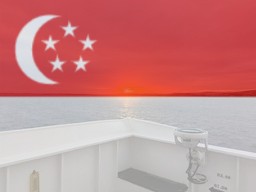 Established in 1966 and administered by the Maritime and Port Authority of Singapore (MPA), the Singapore Registry of Ships (SRS) is the fifth-largest registry globally, commanding a 6.29% market share and overseeing over 96 million gross tons.
The SRS fleet is characterized by its modern, high-standard profile, consisting predominantly of tankers, container vessels, and bulk carriers, as well as complex offshore units (such as FPSOs and drillships). The MPA is heavily invested in digitalization, maritime decarbonization pathways, and alternate fuel research to ensure Singapore remains a premier flag of choice for forward-looking operators.
6. China Maritime Safety Administration (China MSA)
 The China Maritime Safety Administration was formed in 1983 through the consolidation of the country’s inspection and harbor supervision authorities. Based in Beijing, China MSA manages the substantial domestic and international fleet supporting China’s trade network.
Representing a 5.39% global market share and over 61 million gross tons, China’s national registry has grown rapidly alongside the expansion of Chinese state-owned and private shipping lines, operating under strict domestic and international statutory guidelines.
7. Malta Ship Registry
 Malta is one of Europe’s primary maritime hubs. Administered by the Merchant Shipping Directorate within Transport Malta, the registry was established as an open flag following the Merchant Shipping Act of 1973.
Operating under European Union legislation since 2004, the Maltese flag offers a stable legal environment, transparent mortgage-recording systems, competitive tonnage tax frameworks, and round-the-clock emergency support from its base in Valletta. Malta commands a 5.23% market share, with strong performance across commercial cargo vessels, high-tonnage cruise liners, and commercial superyachts.
8. Bahamas Maritime Authority (BMA)
 The Bahamas Maritime Authority (BMA), established in 1995, operates globally with dedicated offices in London, New York, Nassau, Hong Kong, Tokyo, Piraeus, and Frankfurt. It represents approximately 3.73% of the world market share with over 53 million gross tons.
The Bahamas flag is notably the registry of choice for the global cruise industry, carrying a significant portion of the world’s passenger fleet alongside merchant bulkers and tankers. Operations are supported through digital service integration via the BORIS (Bahamas Online Registration Information System) platform.
9. Hellenic Republic (Greece)
 Greece holds a unique position in global shipping: while Greek shipowners control the largest commercial merchant fleet in the world by deadweight, a proportion of their tonnage is flagged under open registries such as Liberia, the Marshall Islands, and Panama.
The national Greek Shipping Registry, overseen by the Ministry of Maritime Affairs and Insular Policy, represents 1.96% of the global fleet. To bolster competitiveness against other European flags, the Hellenic administration continuously refines its collective agreements, tax regimes, and regulatory frameworks to incentivize domestic registration and provide career opportunities for Greek seafarers.
10. Ministry of Land, Infrastructure, Transport and Tourism (MLIT) – Japan
 Japan’s national fleet is overseen by the Maritime Bureau of the Ministry of Land, Infrastructure, Transport and Tourism (MLIT). MLIT oversees ship safety inspection systems, the Japan Coast Guard, and national maritime infrastructure.
While Japanese owners control a vast segment of the global fleet, many utilize international open registries for international operations. MLIT continues to update Japan’s tonnage tax system and statutory inspection frameworks to encourage domestic flag registration and support high-standard Japanese-flagged tonnage on major trading routes.