
Marlins Test: Question Breakdown, Exam Structure & Preparation Strategy for Seafarers
The Marlins English Language Test is the global benchmark for evaluating Maritime English proficiency across international crews. Certified test results are recognized and mandated by leading ship managers, crewing agencies, and offshore operators worldwide.

1. What is the Marlins Test and Why Are There No “Ready Answers”?
The Marlins test was developed jointly by maritime educational testing specialists and shipping industry professionals. Unlike technical assessments such as Seagull CES or SETS 6000, Marlins does not test your navigation mechanics or engine maintenance directly. Instead, it measures your ability to understand orders, communicate effectively within a multinational crew, and react safely in emergency situations.
Questions are randomly generated from a secure cloud database of several hundred items. This guarantees that no two exam sessions are identical. Tests are tailored to industry branches:
- ISAF Seafarers (Deck & Engine Officers, Ratings): Strong focus on IMO conventions, watchkeeping commands, radio communication, and safety.
- Cruise Ship Staff: Customer care, passenger instructions, polite dialogue, and medical emergency scenarios.
- Offshore Units: Oil & gas offshore terminology, platform safety, and permit-to-work systems.
Memorizing screenshots or leaked answer sheets from the internet is completely ineffective. The testing platform randomizes both question sequences and distractors inside multiple-choice arrays. Without a solid understanding of basic grammar and pronunciation, scoring above officer benchmark levels is impossible.
Typical Crewing Benchmark Requirements:
| Rank / Position | Overall Score | Minimum Listening |
|---|---|---|
| Senior Officers (Master / Chief Mate / Chief Engineer) | 85% – 90% | ≥ 80% |
| Junior Officers (OOW / 2nd & 3rd Eng / ETO) | 75% – 80% | ≥ 70% |
| Ratings (Bosun, AB, OS, Oiler, Wiper) | 60% – 70% | ≥ 55% |
2. Exam Regulations, Fees & Technical Requirements
The exam is taken online via the official Marlins Testing Platform.
- Payment or Access Code: If your company sponsors the test, you will receive a pre-paid Company Licence Code. For self-testing, the fee is paid directly on the site via credit card.
- Exam Duration: You have 60 minutes for 85 questions. If you exceed 60 minutes, the session does not disconnect, but your actual total time will be stated clearly on your final certificate.
- Question Navigation: You can review previous questions and change your answers at any point before pressing the final submit button.
- Connection Failure: If you experience a browser crash or internet disconnection, your licence code remains valid for 36 hours, allowing you to resume exactly where you left off.
- Hardware: High-quality wired closed-back headphones are strongly recommended. Laptop speakers frequently distort quiet consonants and endings during the listening section.
3. Comprehensive Breakdown of All 6 Marlins Task Categories
🎧 Listening Comprehension (25 questions) Highest Weight
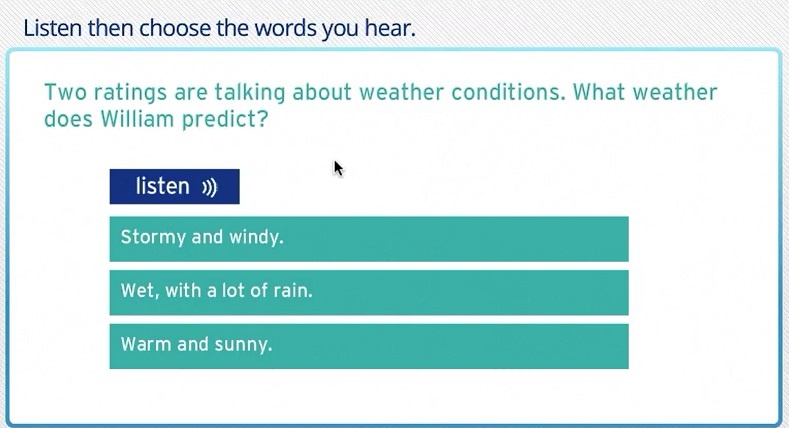
Evaluates your comprehension of spoken English across realistic background radio static and international maritime accents (Filipino, Indian, British, Slavic, and Chinese).
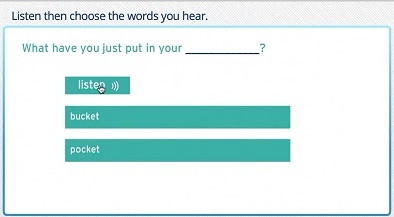
Audio scenarios frequently introduce distractors: speakers mention several numbers, courses, or equipment names, but only one corresponds to the question asked.
📝 Grammar (30 questions)
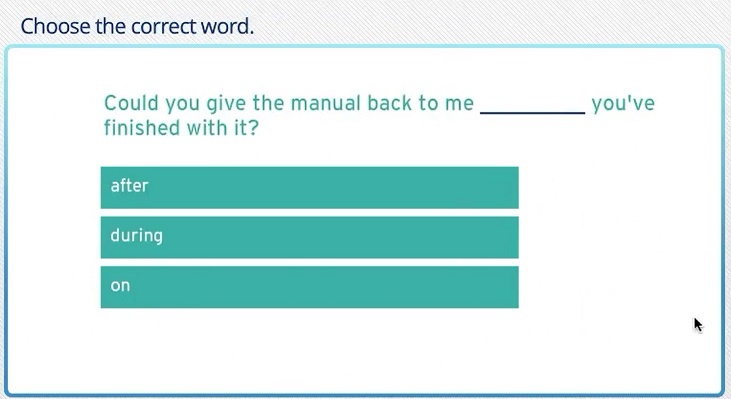
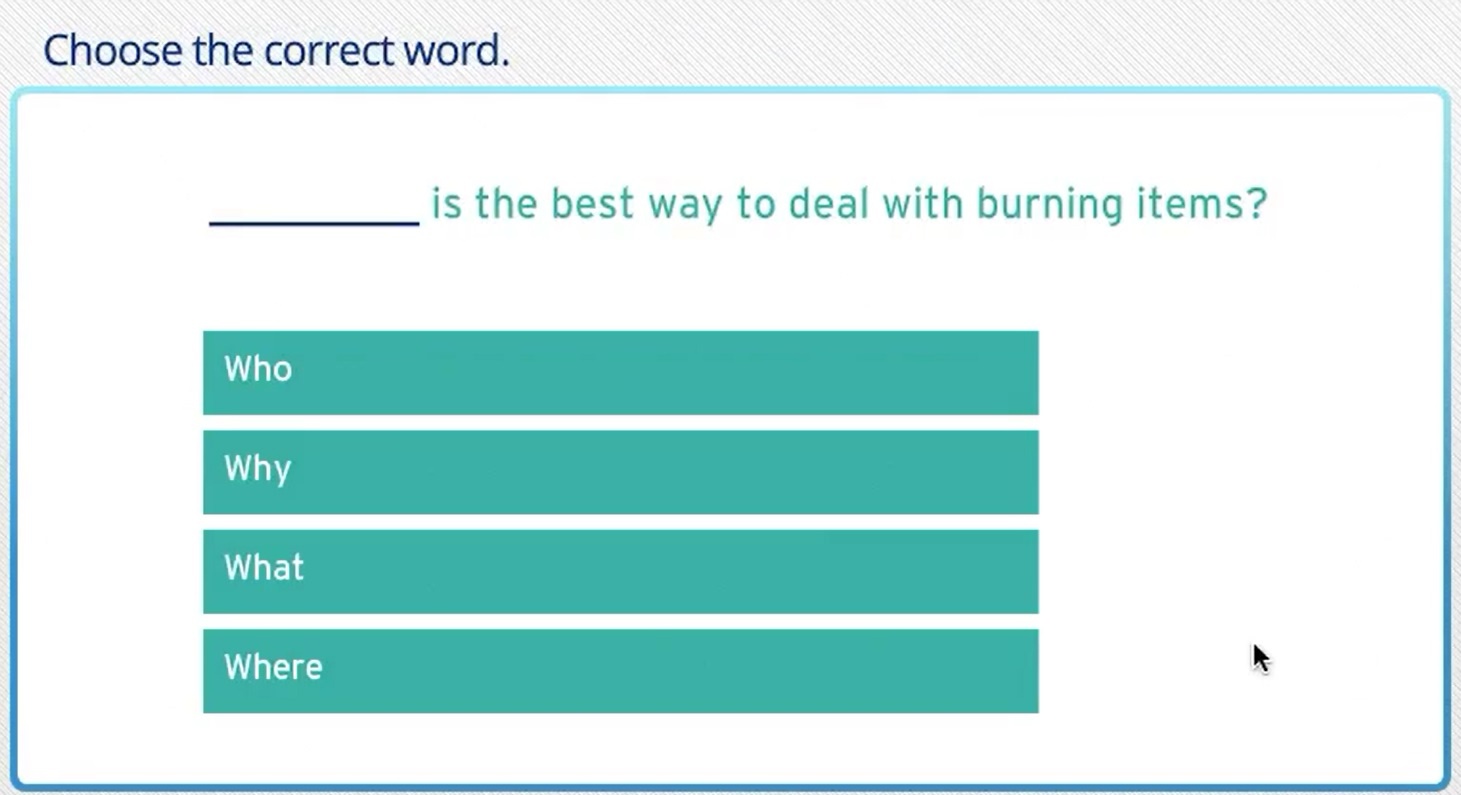
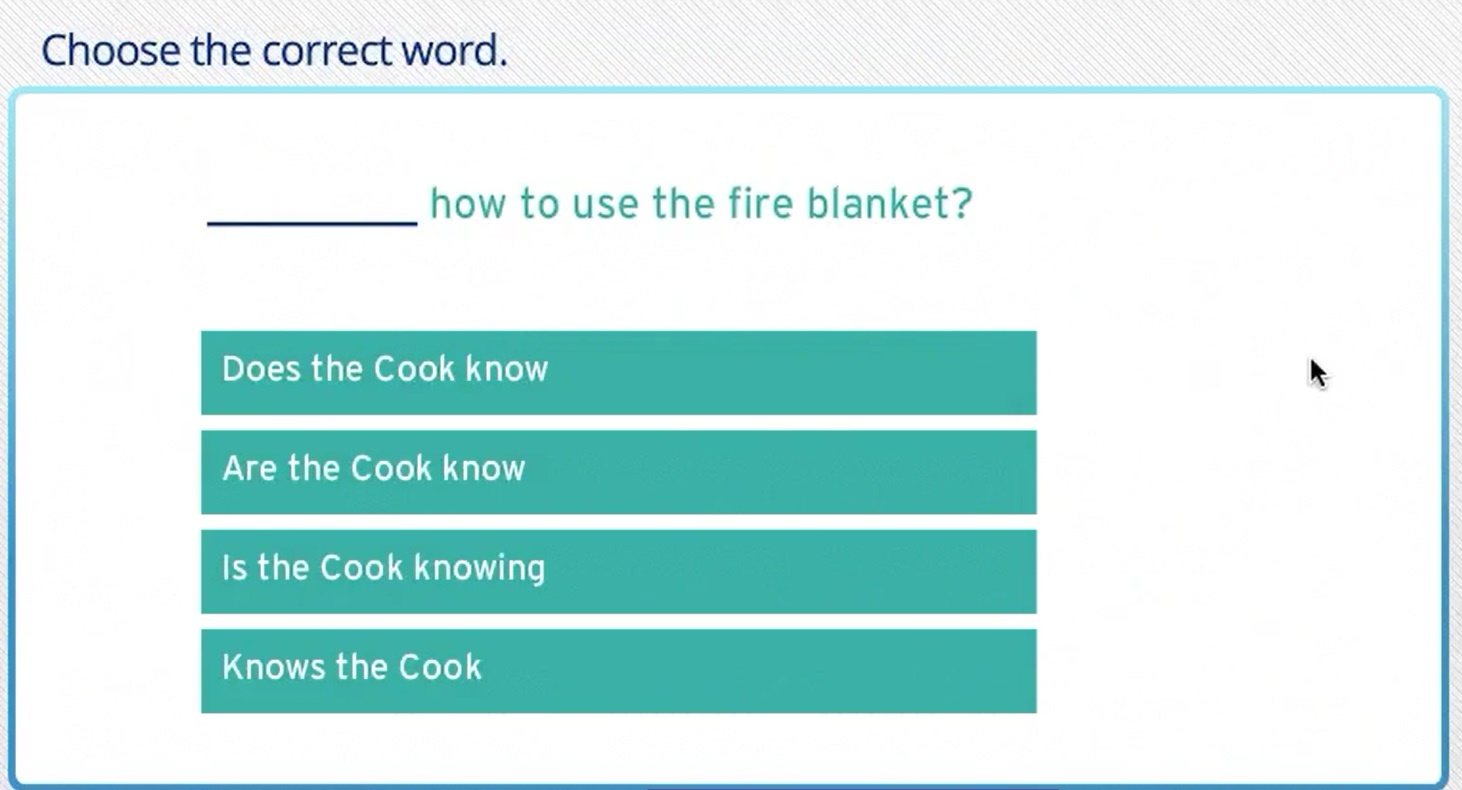
The largest section in the test, assessing functional grammar: prepositions of place and direction (in, on, at, into), verb tenses (Present Simple, Continuous, Perfect), modal verbs (must, should, ought to), and correct question forms.
1. Selecting the correct preposition:
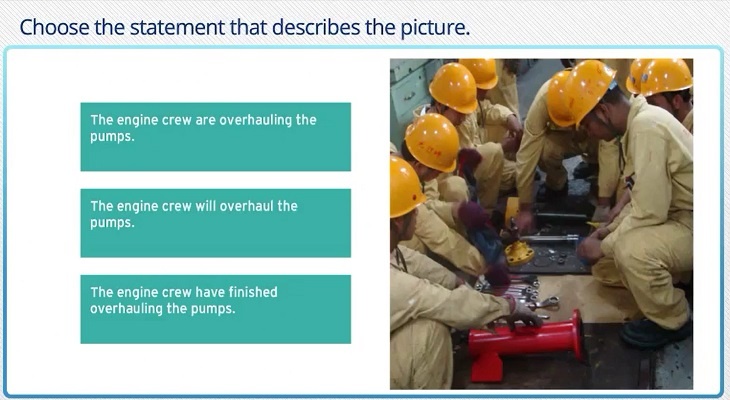
2. Describing picture actions with grammatical precision:
3. Choosing the right verb tense:
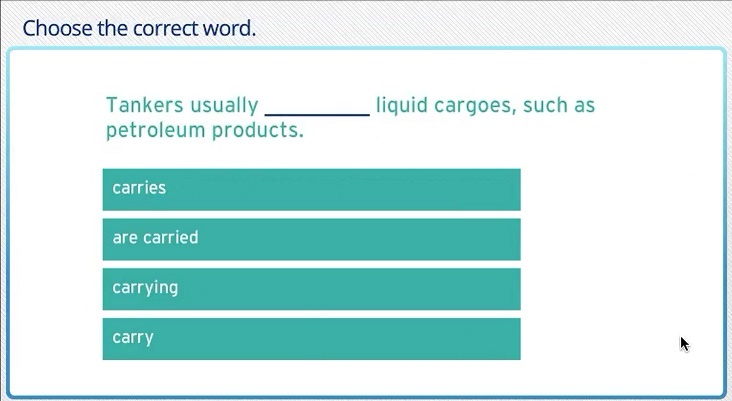
4. Matching question forms to answers:
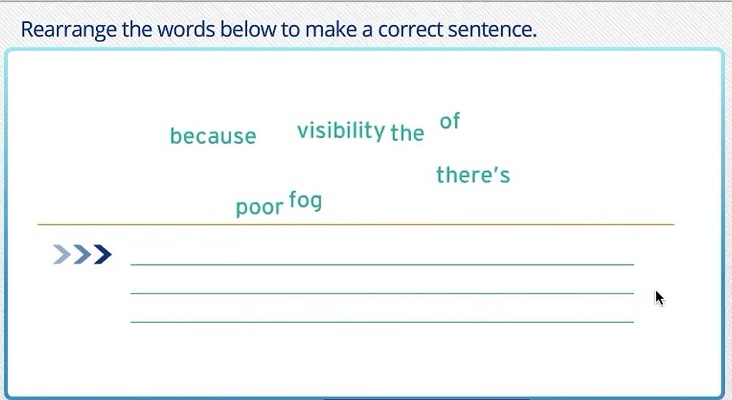
5. Word Order in Sentences:
English enforces strict syntax: Subject → Verb → Object → Place → Time. Take your time to re-read assembled sentences carefully.
⚓ Vocabulary (15 questions)
Tests maritime lexicon (deck hardware, mooring arrangements, safety gear) alongside everyday shipboard vocabulary.
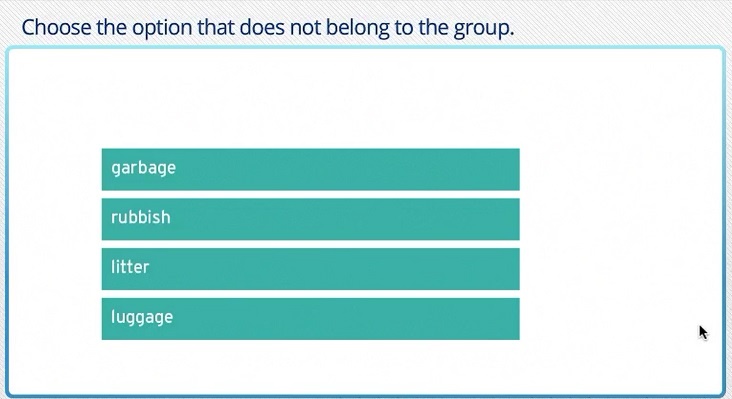
1. Odd One Out:
Identify the word that does not belong to the semantic group (e.g., three safety appliances and one workshop tool).
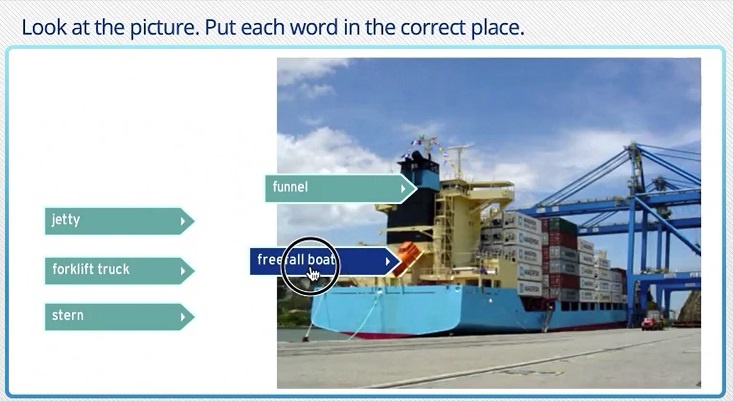
2. Drag-and-Drop Labeling:
Drag labels onto the corresponding areas of ship components, anchor windlasses, pilot ladders, or lifeboat fittings.
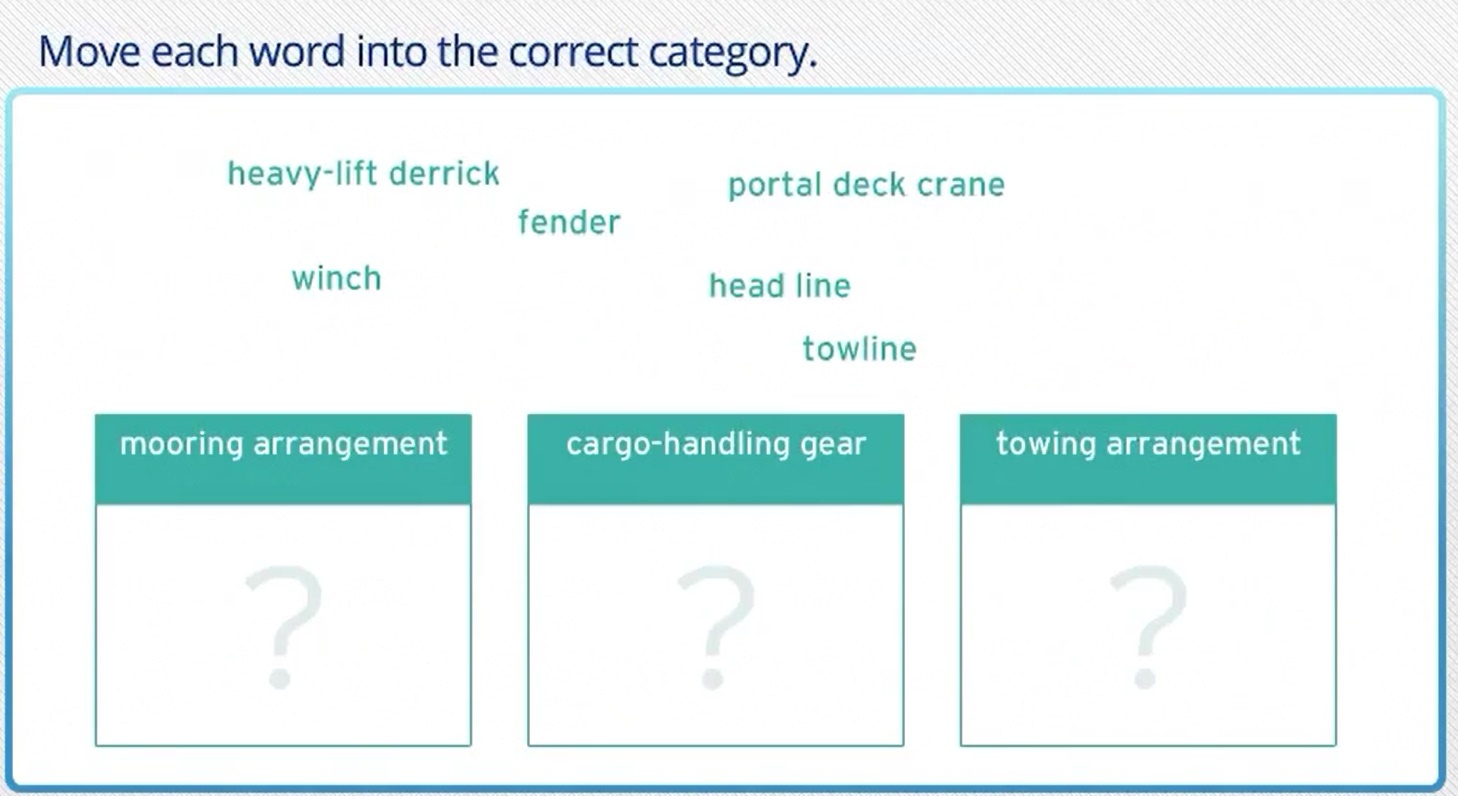
3. Categorization:
Sort given terms into two themed columns. If a term is unfamiliar, solve the remaining items first to identify it by elimination.
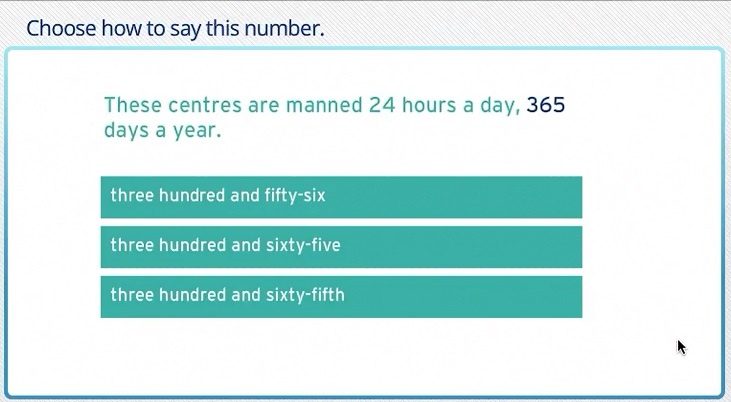
🔢 Time and Numbers (5 questions)
Tests comprehension of spoken numerical values, coordinates, pressures, decimals, and 24-hour UTC times. Review digit-by-digit phone and MMSI number pronunciation.
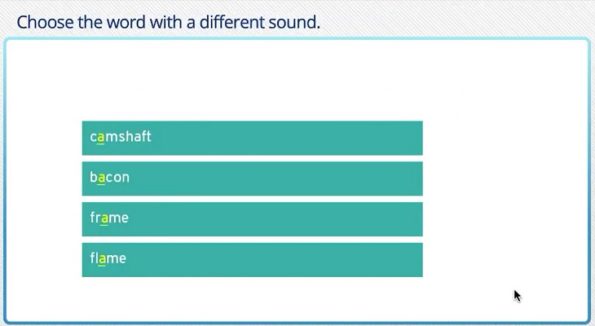
🗣️ Different Sounds and Pronunciation (9 questions)
Phonetic differentiation tasks. Select the word that features a different vowel or consonant sound (such as short vs. long vowels, or voiced vs. unvoiced th).
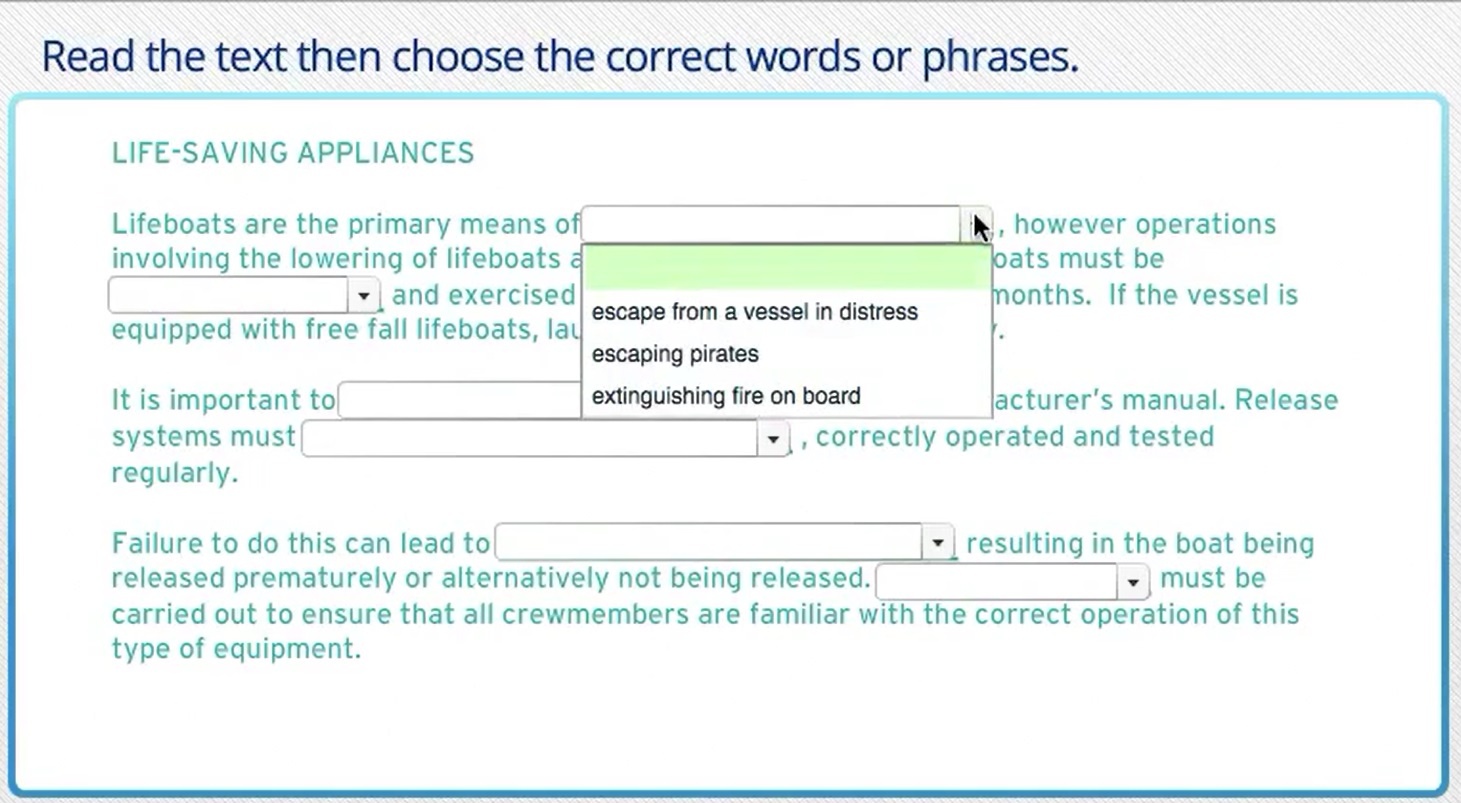
📖 Reading (1 comprehensive section)
An authentic maritime passage (flag circular, incident investigation excerpt, or manufacturer manual) with missing words. Read the full text once to grasp the narrative context before selecting drop-down options.
4. Marlins Certificate & Online Verification
Upon completing your session, you can download and print an official certificate with a unique verification code. Employers verify authenticity via the Marlins Online Database, preventing fraudulent paper submissions.