
What is a Security Level on a Ship?
Security levels (MARSEC Levels) in accordance with the ISPS Code describe the current scenario related to the security threat to a country and its coastal region, including ships visiting that country.
Security levels are determined in cooperation with ship and port authorities while maintaining the current state of national and international security. The local government (Contracting Government/Port Authority) sets the security level and ensures that the Port State and ships are informed before entering or while moored in the port.
All ship personnel and port staff are assigned specific security duties, which vary depending on their roles. In addition, security drills are frequently conducted on board ships.
Once the security level is determined under the ISPS Code, it is displayed in a prominent place on board the ship, usually near the gangway. It should be noted that a ship’s MARSEC level must always be the same or higher than the port’s MARSEC level.
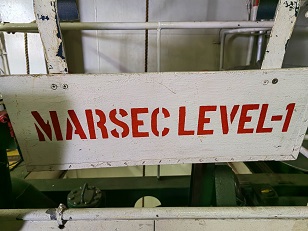
Key Differences in Ship Security Levels
For any Security Level on a ship, the following general points must be kept in mind:
-
Verification of the identity of all persons boarding or wishing to board the ship.
-
Designated secure areas are established in coordination with the PFSO (Port Facility Security Officer).
-
Segregate screened persons from unscreened persons for operational convenience.
-
Separation of embarking and disembarking persons (mostly applies to passenger ships).
-
Identification of access points that need to be secured against unauthorized entry.
-
Securing areas that provide access to the crew and personnel.
-
Conducting security briefings for all ship personnel regarding possible threats and levels associated with the port.
-
Continuous compliance with the SSP (Ship Security Plan).
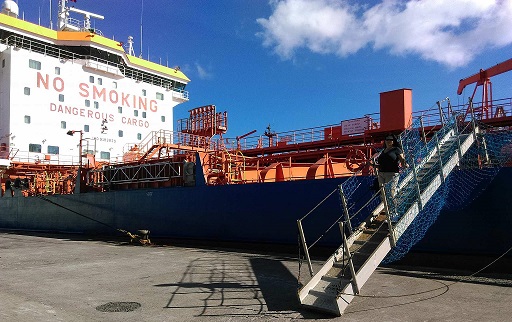
MARSEC Level 1
This is the normal level at which the ship or port facility operates daily. Level 1 ensures that security personnel maintain minimum appropriate protective security measures 24/7.
At this level, all persons boarding the ship may be subject to search. The frequency of searches must be specified in the SSP. Such searches should be conducted in coordination with the port facility. It is important to respect the human rights of the person being searched, and the search must not violate their dignity.
-
Minimum security measures are always maintained on board and in the port.
-
Ship and port operations are carried out in accordance with the Ship and Port Facility Security Plans.
-
The port facility ensures constant monitoring of “restricted” areas.
-
The ship and the port authority mutually supervise the loading and unloading of cargo and stores, ensuring access control and other minimum security criteria.
-
Minimum ship access control is maintained at all times.
MARSEC Level 2
A heightened level for a period of time during a security threat that has become apparent to security personnel. Appropriate additional measures will be implemented at this security level.
At this level, the SSP must establish the measures to be applied to protect against the increased risk. Heightened vigilance and stricter control regarding ship security are essential here.
-
Assigning additional personnel to patrol access areas.
-
Preventing waterside access to the ship.
-
Establishing a restricted zone on the shore side of the ship.
-
Increasing the frequency and detail of searches for persons embarking or disembarking.
-
Escorting all visitors on board.
-
Additional security briefings for ship personnel emphasizing the current security level.
-
Conducting a full or partial search of the ship.
MARSEC Level 3
This level includes further specific security measures for an imminent or actual security incident, to be maintained for a limited time. Security measures must be enforced even if the specific target may not yet have been identified.
Again, the SSP must be followed, and close communication with the port facility must be maintained. The following measures must be implemented with the highest degree of vigilance and detail:
-
Restricting access to a single controlled access point.
-
Granting access strictly to authorized personnel or those responding to the security incident.
-
Suspension of embarkation and disembarkation.
-
Suspension of cargo operations, deliveries of stores, etc.
-
Evacuation of the ship, if necessary.
-
Close monitoring of the movement of people on board.
-
Preparation for a full or partial search of the ship.
Restricted Areas
The SSP must specify the restricted areas to be established on board. The purpose of these areas is to restrict access, protect personnel on board, and secure the cargo from theft or tampering.
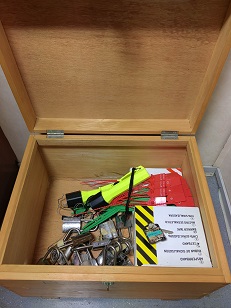
Restricted areas may include the navigation bridge, engine rooms, spaces containing security-related equipment, ventilation spaces, spaces containing IMDG cargo, crew accommodation, and any other areas specified in the SSP.
Regarding restricted areas, the following measures must be applied:
MARSEC Level 1
-
Locking/securing access points.
-
Using surveillance equipment to monitor the area.
-
Regular patrolling.
-
Using alarm systems to alert ship personnel in case of unauthorized entry.
MARSEC Level 2
-
Establishing restricted zones near access points.
-
Continuous monitoring using surveillance equipment.
-
Assigning additional personnel to patrol the specified areas.
MARSEC Level 3
-
Setting up restricted areas near access points at the highest level of strictness.
-
Searching restricted areas as part of a full ship search.
Cargo Operations and Ship Security Levels
Security measures regarding cargo operations are applied to prevent tampering and to prevent the carriage of any cargo that is not authorized or manifested for carriage on board. The following measures can be used as a guideline:
MARSEC Level 1
-
Routine checks of cargo, transport units, and cargo spaces.
-
Matching the cargo with the documentation.
-
Loading of searched vehicles in coordination with the PFSO.
-
Checking seals to prevent unauthorized access.
MARSEC Level 2
-
Detailed inspection of cargo, transport units, and cargo spaces.
-
Intensive checks to ensure only the intended cargo is loaded.
-
Intensive inspection of loaded vehicles.
-
Increased frequency of seal inspections.
MARSEC Level 3
-
Suspension of loading or unloading operations.
-
Verifying the inventory of Dangerous Goods (DG) and hazardous substances on board.
Delivery of Ship’s Stores
Stores and provisions must be checked for packaging integrity, including random checks. Cross-reference the delivered items with the documented orders.
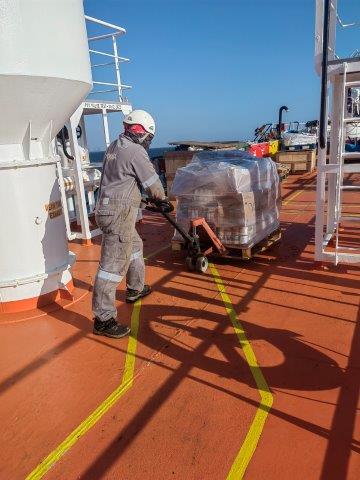
The following measures apply:
MARSEC Level 1
-
Match orders with documents before bringing them on board.
-
Securely stow the received stores.
MARSEC Level 2
-
Thorough inspections of items before loading and intensified checks of the stores.
MARSEC Level 3
-
Delivery of stores is restricted to absolute emergencies only.
Baggage and Ship Security Levels
Baggage must be screened before boarding; if necessary, use advanced methods such as X-ray (more feasible on passenger fleets or utilizing port facility equipment).
MARSEC Level 1
-
Checking and searching of baggage, which may include X-ray screening.
MARSEC Level 2
-
Full search, including X-ray screening of all baggage.
MARSEC Level 3
-
Suspension of baggage loading.
-
Refusal to accept unaccompanied baggage.
Ship Security Monitoring
Monitoring must include deck lighting during hours of darkness, watchkeeper patrolling, and intrusion detection devices.
The ship’s deck and access points must be well-illuminated in the dark. In ports with a high incidence of smuggling, underwater hull inspections must also be conducted.
Ship security and port security complement each other. One cannot be secure without the assistance of the other. Communication and cooperation between the SSO (Ship Security Officer) and the PFSO are essential to comply with the SSP and maintain the required security levels.