
Navigation // Anchoring Operations & Seamanship
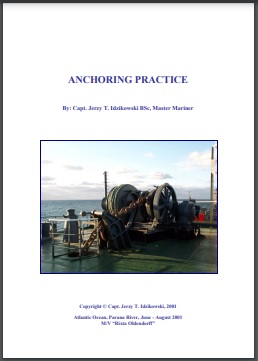
Anchoring Practice: A Practical Guide for Shipmasters (Capt. Jerzy T. Idzikowski)
One of the most exhaustive and well-structured professional handbooks on ground tackle and anchoring operations in the modern merchant fleet. Features step-by-step passage planning for anchorage areas, Under Keel Clearance (UKC) evaluation, scope of chain determination, maneuvering in congested roadsteads, and emergency procedures for dragging or lost anchors.
About the Manual: Fundamental Seamanship in Anchor Work
Anchoring a large merchant ship is one of the most critical bridge operations, requiring precise spatial awareness, an intuitive feel for hull momentum, and proactive consideration of hydro-meteorological forces. Errors in selecting the letting-go position, failing to take off headway in time, or deploying an inadequate scope of cable frequently culminate in dragging anchor, collisions with adjacent vessels, or groundings.
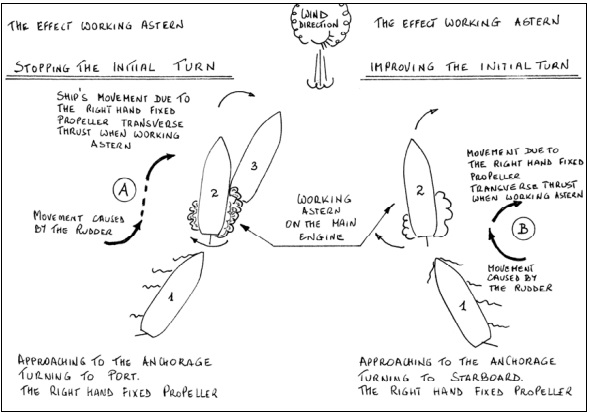
Written by experienced Master Mariner Capt. Jerzy T. Idzikowski, “Anchoring Practice” translates complex hydrodynamic theory into straightforward operational workflows and clear sketches. The handbook thoroughly investigates the operational differences between letting go under gravity and walking out the anchor by windlass gear in deep water, safe braking practices, speed reduction techniques, and anchoring maneuvers within high-density roadsteads.
To enhance shiphandling competence, navigators should also consult our Anchor Chain Length Calculator, review the Under Keel Clearance Calculation Guide, and master conning orders in the Helmsman Watch & Conning Orders Guide.
Chapter Modules & Practical Maneuvers:
1. Preparation, Calculations & Approach:
- Appraisal & Planning: Selection of anchor drop positions based on chart soundings, holding ground characteristics, and swinging circle geometry.
- Under Keel Clearance (UKC): Evaluating static and dynamic underkeel margins, swell allowance, and tidal fluctuations via our UKC Calculator Online.
- Scope of Anchor Cable: Calculating required shackles on deck based on water depth and wind force (from 6–10 depths rule to severe weather criteria).
- Speed Control & Drop: Dead slow approach, bleeding off forward momentum, reversing engines to initiate sternway, and releasing the brake under control.
- Meteorological Assessment: Accounting for wind force and current vectors using onboard weather stations and the True Wind Calculator.
2. Advanced Maneuvers & Emergency Actions:
- Mooring with Two Anchors: Executing a Running Moor, Standing Moor, or Open Moor to restrict swinging room in narrow channels or gale conditions.
- Anchors in Berthing: Dredging or snubbing an anchor to check headway, bow-in maneuvers, and off-berth clearing in strong onshore winds.
- River & Estuary Anchorages: Mitigating river currents, turning on the tide, and handling flotsam or debris entanglement.
- Dragging Anchor: Early detection of dragging via radar transits, GPS anchor watch alarms, and combined engine/rudder techniques to re-establish holding grip.
- Emergency Procedures: Windlass brake failure, fouled hawse, chain twists, and slipped anchor releases in heavy weather.
Download “Anchoring Practice” (Capt. J. Idzikowski)
Access the complete digital PDF edition featuring practical maneuvering sketches, vector diagrams, and operational formulas:
Master Mariner Practice
Anchoring Practice