
Ship’s Business // Maritime Logistics & Customs Control
Cargo Manifest: Structure, Types, Differences from the Bill of Lading & Customs Regulations
A comprehensive practical guide to the master shipping manifest: structural elements and essential data fields, operational and legal distinctions from Bills of Lading, specialized variants (Freight, HAZMAT, Reefer, OOG), amendment protocols, and compliance requirements under automated customs filing systems like AMS.
What Is a Cargo Manifest?
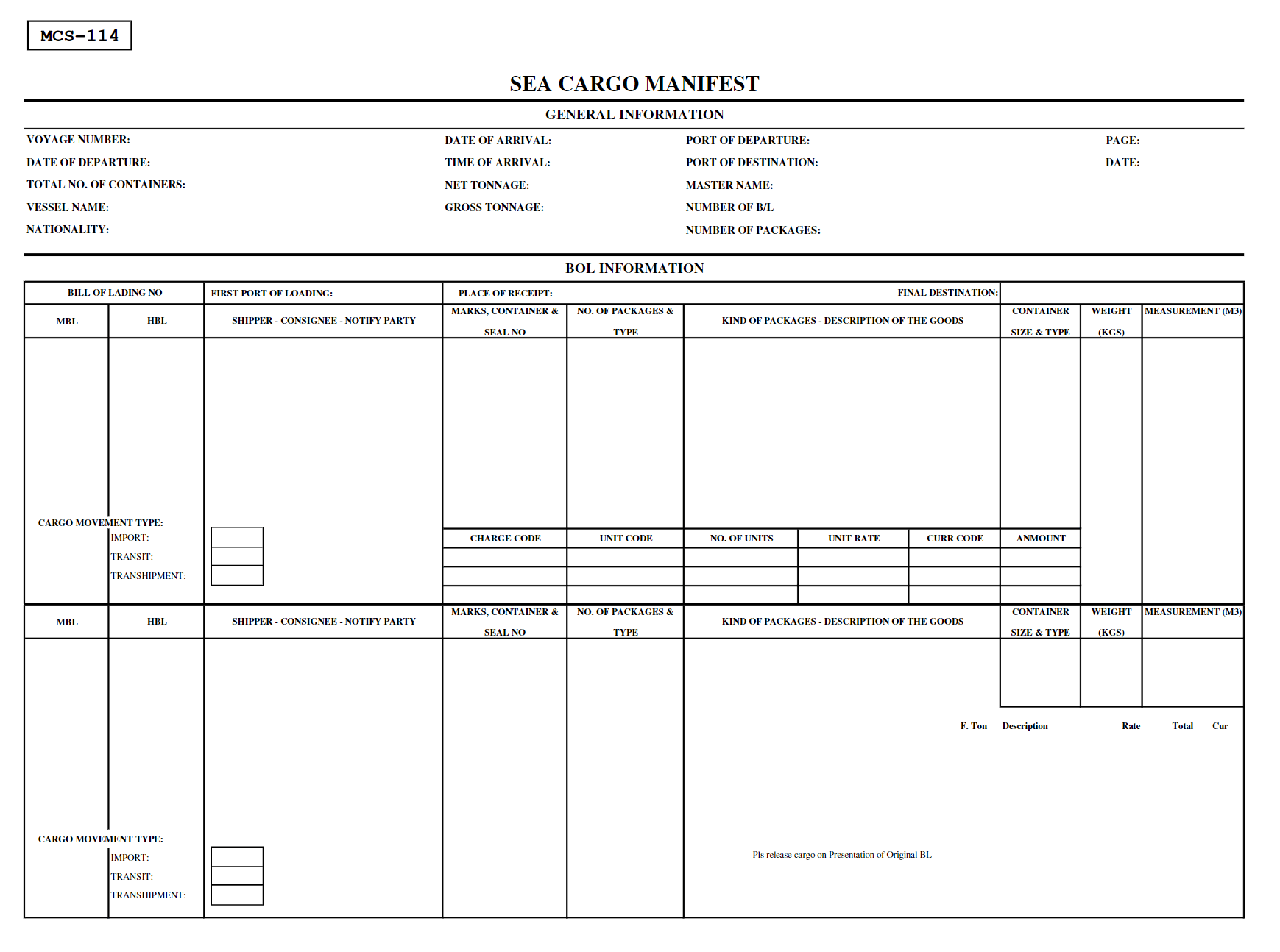
A Cargo Manifest is a consolidated master inventory listing all cargo parcels loaded aboard a commercial vessel for a specific voyage. It is a cornerstone legal and operational document in international maritime logistics, providing port authorities, customs agencies, and carriers with an exhaustive overview of the ship’s entire physical lading.
Typically, the cargo manifest schedules every individual Bill of Lading (B/L) issued for the voyage, detailing commodity specifications, quantities, weights, and container numbers. In vessel clearance portfolios, copies of individual shipping receipts are annexed directly behind this master manifest sheet.
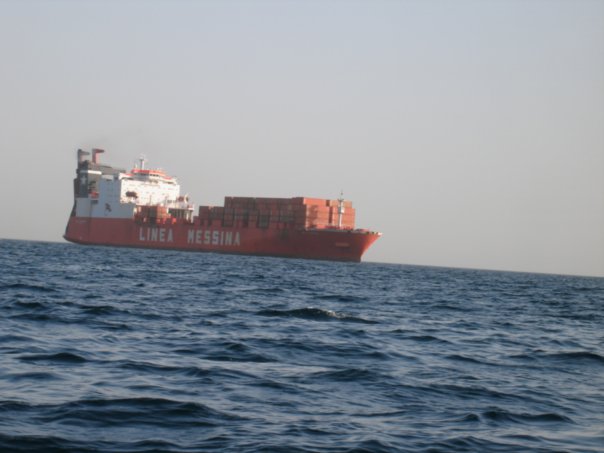
Client A in the Netherlands procures 10 industrial wind turbine sets from Manufacturer B in Italy. Manufacturer B books space aboard a general cargo vessel. Along its transit route to Rotterdam, the ship also loads consumer electronics, industrial parts, and palletized commodities intended for various consignees in intermediate ports.
The vessel’s consolidated cargo manifest will list the 10 wind turbines consigned to Client A alongside every consignment taken aboard for other merchants. Customs and port border authorities in each intermediate and final port use this master document to cross-verify physical cargo discharges against declared imports.
Without an officially validated, submitted, and stamped cargo manifest, goods cannot legally clear customs, receive discharge permits, or be released from maritime terminals.
Essential Data Fields and Structure of the Manifest
Cargo manifest formats are standardized globally under the International Maritime Organization’s Convention on Facilitation of International Maritime Traffic (FAL Convention). A legally sound manifest contains the following particulars:
- Vessel name, IMO number, call sign, flag state, and operating carrier details;
- Designated Port of Loading (POL) and Port of Discharge (POD);
- Individual Bill of Lading reference numbers;
- Full legal names, physical addresses, and contact details of Shippers;
- Full legal names and addresses of Consignees or designated Notify Parties;
- Container numbers, seal numbers, and shipping marks (for containerized shipments);
- Package counts, packaging types (pallets, drums, crates), and detailed commercial goods descriptions (including Harmonized System / HS Codes);
- Gross and net weights (expressed in kilograms or metric tons) and cubic measurements;
- Declared commercial value of the commodities (required by most destination customs authorities).
Stakeholder Usage and the Shipmaster’s Legal Responsibility
While the cargo manifest serves charterers, terminal stevedores, and cargo underwriters, its primary recipient is the port customs administration.
Under international maritime law, the Shipmaster bears statutory personal responsibility for the accuracy of all declarations submitted to coastal customs authorities. Discrepancies between physical tallies and manifest entries—whether unmanifested goods, undeclared packages, or weight mismatches—are routinely categorized by customs agencies as smuggling or fraudulent misdeclaration. This exposes the vessel to administrative arrest, cargo confiscation, and massive civil fines (as detailed in our guide on Ship’s Business for Shipmasters).
The cargo manifest is compiled by the carrier’s loading port agent based on finalized Bills of Lading. The agent transmits electronic manifest datasets to counterparts at discharge ports to initiate preliminary customs clearance and dispatch formal arrival notices to consignees.
Cargo documentation is finalized once the closing manifest dataset is uploaded into the ocean carrier’s central enterprise resource planning (ERP) system. To prevent fraudulent alterations during transit, the software database locks manifest records permanently after a mandatory deadline following vessel departure.
Primary Classifications and Types of Cargo Manifests
Depending on physical cargo traits, financial arrangements, and statutory clearance mandates, commercial shipping relies on several specialized manifest variants:
Unlike a standard customs manifest that omits commercial freight rates, a Freight Manifest incorporates detailed financial data: baseline sea freight rates, bunker adjustment factors (BAF), currency surcharges (CAF), terminal handling charges (THC), and payment terms (Freight Prepaid at loading port or Freight Collect at destination). This document is used by carrier accounting desks, lines, and shipbrokers for commercial freight collection and agency commissions.
A statutory document mandatory for all consignments subject to the International Maritime Dangerous Goods Code (IMDG Code).
The dangerous goods manifest details: UN Number, Proper Shipping Name (PSN), primary and subsidiary hazard classes, Packing Group, Flash Point, marine pollutant flags, Emergency Response Schedules (EmS), and Medical First Aid Guide (MFAG) cross-references published by the World Health Organization. Dangerous goods cannot be loaded or clear territorial waters without this document approved by port authorities.
Drafted for temperature-sensitive cargoes: frozen meats and seafood, fresh fruit, pharmaceuticals, and specialized chemicals requiring active thermal control.

This manifest specifies target temperature set points (in Celsius or Fahrenheit), allowable temperature thresholds, air circulation rates (de-hum settings), and fresh air exchange volumes (in cbm/h) for every connected reefer unit on board.
Covers heavy-lift, oversized, and non-standard shipments (Abnormal Indivisible Loads — AIL) that exceed standard container dimensions: industrial turbines, drilling modules, yachts, and wind turbine blades. It provides critical dimensional data: overall length, width, height, overhangs (fore, aft, port, starboard), total weight distribution, center of gravity, and lifting/lashing points.
The functional difference lies in procedural customs timing. The manifest lodged with port customs prior to outbound clearance from the loading port is designated the Export Manifest. The dataset transmitted electronically to the destination port customs prior to inward entry is designated the Import Manifest.
Can a Cargo Manifest Be Amended?
Because cargo manifests serve as the legal basis for assessing national import duties, excise taxes, and VAT, customs authorities enforce strict rules against modifying submitted manifests.
Carriers cannot simply edit descriptions, piece counts, or weights after submission. Alterations require a formal legal petition known as a Manifest Amendment, submitted through the local port agent. Customs officers review supporting evidence (amended commercial invoices, packing lists) and routinely levy administrative penalty fees before approving adjustments.
Automated Manifest System (AMS) and Digital Customs Clearing
Maritime customs agencies globally (such as U.S. Customs and Border Protection — CBP, alongside agencies in Canada, Japan, and China) mandate digital manifest submissions via an Automated Manifest System (AMS).
- The “24-Hour Rule”: Ocean carriers must transmit digital manifest datasets into the AMS database at least 24 hours prior to loading cargo aboard the ship at foreign ports of departure;
- Anti-Terrorism Screening: Under the International Ship and Port Facility Security Code (ISPS Code), algorithms analyze manifest entries to flag security risks, prohibited substances, and high-risk shippers;
- Severe Enforcement Penalties: Late or inaccurate filings trigger immediate Do Not Load (DNL) notices, hold orders, and fines reaching tens of thousands of dollars per incorrect entry line.
Cargo Manifest vs. Bill of Lading: Key Differences
While related, the Cargo Manifest and the Bill of Lading serve entirely different legal, commercial, and operational functions:
| Operational Criterion | Cargo Manifest | Bill of Lading (B/L) |
|---|---|---|
| Legal Function | Consolidated master inventory and customs declaration of all cargo aboard. | Document of title, receipt of goods, and evidence of the contract of carriage. |
| Negotiability & Ownership | Non-negotiable. Confers zero ownership or transfer rights over cargo. | Negotiable (when issued “To Order”). Endorsement transfers legal ownership. |
| Quantity Issued | One master document per voyage, categorized by loading and discharge ports. | Multiple original individual documents issued per parcel or container. |
| Issuing Entity | Compiled by the vessel’s port agent or carrier operations desk. | Signed by the Shipmaster, ocean carrier, or authorized agent on the Master’s behalf. |
| Primary Stakeholders | Customs, border security, port authorities, and terminal operators. | Shippers, consignees, freight forwarders, and commercial trade banks. |
For a detailed analysis of transport contract responsibilities, review our practical guide on Ship’s Business and Commercial Bills of Lading.
Frequently Asked Questions: Ship’s Cargo Manifest (FAQ)