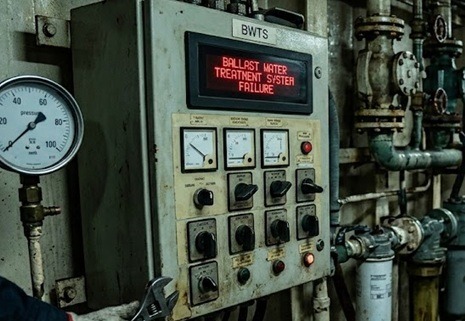
Ballast Water Treatment System Out of Order: How to Avoid Ship Detention
A Ballast Water Treatment System (BWTS) failure is a Chief Officer's worst nightmare, especially before calling at US or Australian ports. European Port State Control (PSC) authorities are also becoming increasingly aggressive regarding this matter.
The situation is highly stressful: cargo operations are imminent, you need to take on or discharge ballast, but the BWTS displays a critical error. Personal experience shows that a shipping company's first instinct might be to hide the problem and avoid reporting it to the authorities.
Instead, we will break down the "correct" and lawful path for a responsible ship officer. By reading this guide, you will understand the exact step-by-step procedure for a BWTS failure and how to confidently answer tricky questions from PSC inspectors.
1. Officially Record the BWTS Failure
The first rule of a seafarer: if an event is not in the logbook, it never happened.
- Log Books: Immediately record the time and nature of the BWTS breakdown in both the Deck Log Book and the Engine Log Book.
- BWRB: Make a detailed entry in the Ballast Water Record Book under the "Operational failures" section. Clearly state what broke down and what corrective measures were taken.
- Notify the Office: Promptly send a report to your Technical Department and the DPA. Issue a formal Damage Report. You need solid proof that the vessel is actively trying to resolve the technical issue (e.g., ordering spare parts, requesting shore service).
2. Who Should You Report To?
Concealing a BWTS breakdown is the worst possible strategy, which can lead to ship detention, massive fines for the shipowner, and personal criminal liability. You must report to:
Port State Control (PSC): Inform the authorities of your destination port BEFORE entering their territorial waters. If you report a broken BWTS when the PSC inspector is already on the gangway, it is considered a serious violation. If you report it in advance, it is treated as a "technical failure" that you are actively trying to fix.
Flag State: Your Flag Administration must confirm they are aware of the situation. Often, they can issue a temporary dispensation allowing you to operate under the D-1 standard (Ballast Water Exchange).
3. Implement Your BWTS Contingency Plan
If the system cannot be fixed onboard by the crew, you must refer to your vessel's approved BWM Plan. It must contain a "Contingency Measures" section:
• Using D-1 Method instead of D-2: The most common alternative is conducting a Ballast Water Exchange in the open sea (at least 200 nautical miles from the nearest land and in water at least 200 meters deep). Important: You must obtain official permission from the destination port authorities before executing this.
• Shore Reception Facilities: In highly developed ports, you can order a specialized barge to receive untreated ballast water, though this is often expensive and time-consuming.
• Internal Transfer: If vessel stability and the cargo plan permit, transfer ballast water internally between tanks without discharging it overboard.
A BWTS failure is not the end of the world, provided you have the email correspondence with the manufacturer and honest, accurate entries in your logbooks. Remember: PSC inspectors hate lies, but they understand technical malfunctions.