
What is the International Convention for the Prevention of Pollution from Ships (MARPOL)?
Just like SOLAS, which regulates the shipping industry in accordance with minimum standards to protect life at sea, the International Convention for the Prevention of Pollution from Ships (MARPOL) is an essential convention for environmental protection.
The International Convention for the Prevention of Pollution from Ships (MARPOL) is a convention that sets standards for the storage, handling, carriage, and transfer of toxic cargoes. In addition, it establishes rules for the disposal of ship-generated hazardous waste, such as cleaning agents and cargo hold wash water, and addresses the hazard of air pollution.
MARPOL and SOLAS are considered the two key safety and environmental protection instruments of the IMO.
MARPOL 73/78, which entered into force in 1973 and was subsequently revised by a protocol in 1978, ensures that shipping remains the least environmentally damaging mode of transport. This ensures the preservation of the marine environment by eliminating pollution from all harmful substances discharged from ships.
Thus, the SOLAS and MARPOL conventions act as two strong pillars supporting the maritime industry, protecting the most critical matters – the prevention of marine pollution and the safety of human life.
Annexes and Sections of MARPOL
The International Convention for the Prevention of Pollution from Ships (MARPOL) consists of six implemented Annexes, along with appendices dedicated to controlling and eliminating marine pollution:
-
Annex I: Regulations for the Prevention of Pollution by Oil (October 1983).
-
Annex II: Regulations for the Control of Pollution by Noxious Liquid Substances in Bulk (April 1987).
-
Annex III: Regulations for the Prevention of Pollution by Harmful Substances Carried by Sea in Packaged Form (July 1992).
-
Annex IV: Regulations for the Prevention of Pollution by Sewage from Ships (September 2003).
-
Annex V: Regulations for the Prevention of Pollution by Garbage from Ships (December 1988).
-
Annex VI: Regulations for the Prevention of Air Pollution from Ships (May 2005).
They are detailed as follows:
MARPOL Annex I
Regulations for the Prevention of Pollution by Oil (October 1983)
This MARPOL protocol was adopted on October 2, 1983, to prevent intentional or accidental discharges of oil or oily mixtures from ships. It consists of 11 chapters, which collectively contain 47 Regulations. The development of such a thorough approach to this issue was prompted by a series of tanker accidents.
Chapter 1 gives a general overview of ANNEX I to the International Convention for the Prevention of Pollution from Ships (MARPOL) and consists of 5 regulations that explain:
-
Regulation 1 “Application” of this chapter to various ship types, as well as
-
Regulation 2 “Definitions” of various terms used in this chapter. This regulation may not apply to all ship types; therefore, separate sections are also provided:
-
Regulation 3 “Exceptions”
-
Regulation 4 “Exemptions”
-
Regulation 5 – it also clarifies the conditions under which an Administration may permit the installation of alternative fittings, materials, appliances, etc., on ships to satisfy the requirements of this Annex. Most importantly, this Annex prohibits the discharge of hazardous waste within 12 nautical miles of the nearest land.
Chapter 2 covers survey and certification requirements for all oil tankers of 150 gross tonnage and above, and other ships of 400 gross tonnage and above. It includes the following regulations:
-
Regulation 6 describes the requirements for various surveys in accordance with MARPOL Annex 1.
-
Regulation 7 provides conditions for the issue or endorsement of an IOPP Certificate to a ship following a successful survey by the relevant Administration.
-
Regulation 8 describes how certificates are issued or endorsed by another Contracting Government, followed by
-
Regulation 9, which specifies the form of the certificate, including languages such as English or the official language of the issuing country.
-
Regulation 10 explains the duration and validity of certificates and establishes timeframes for certificate renewal.
-
Regulation 11 defines the authority of Port State Control under Annex 1 to inspect a ship for compliance.
Chapter 3 covers machinery space requirements for all ships and lists the requirements of Regulations 12–17 to ensure that the engine room and other machinery spaces comply with Annex 1 to the International Convention for the Prevention of Pollution from Ships (MARPOL):
-
Regulation 12 clarifies requirements for tanks for oil residues (sludge) generated on all types of ships as a result of machinery operation, and methods for oil residue disposal. It also provides details on the protection of fuel oil tanks for ships with a capacity of 600 m³ and above.
-
Regulation 13 describes requirements for a standard discharge connection on a ship to dispose of oil residues from sludge and bilge tanks.
-
Regulation 14 – Requirements for oil filtering equipment on board a ship, designed for discharging machinery space bilges or ballast water from fuel oil tanks, are given in this regulation, followed by
-
Regulation 15, which restricts the discharge of treated bilge water in Special Areas.
-
Regulation 16 clarifies the requirement for the segregation of oil and water ballast carried in a ship’s fuel tanks.
-
Regulation 17 lists the requirement to maintain an appropriate Oil Record Book on oil tankers of 150 gross tonnage and above and other ships of 400 gross tonnage and above.
Chapter 4 focuses on requirements for cargo areas and arrangements on an oil tanker and contains a list of various regulations (Regulations 18–36).
Chapter 5 describes how to prevent environmental pollution resulting from an oil pollution incident. Details are provided in Regulation 37, which lists the SOPEP (Shipboard Oil Pollution Emergency Plan).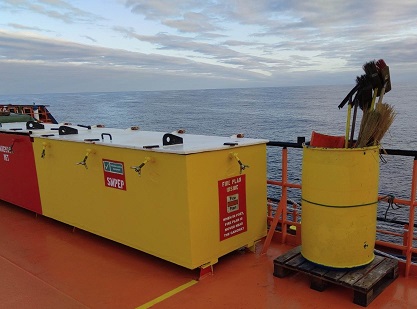
Chapter 6 lists the requirements for reception facilities to which a ship can discharge oily bilge residues/sludge in accordance with Regulation 38, with detailed information on facilities outside and inside Special Areas.
Chapter 7 provides special requirements for fixed or floating platforms in compliance with MARPOL Annex 1 and Regulation 39.
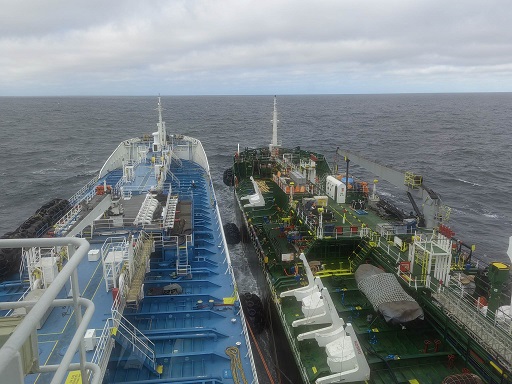
Chapter 8 is dedicated to the prevention of pollution that may occur during the transfer of oil cargo between tankers at sea, also known as ship-to-ship transfer (STS – Ship to Ship Operation). It consists of three regulations from 40 to 42:
-
Regulation 40 defines the scope of application of this chapter.
-
Regulation 41 lists safety and environmental protection rules during STS operations, followed by
-
Regulation 42, which specifies the notifications that must be provided by the ship to the Port State and all other parties involved in the operation.
Chapter 9 details special requirements for the carriage of oil in the Antarctic area under Regulation 43.
Chapter 10 is devoted to verification of compliance with the provisions of this convention under Regulations 44 and 45 and contains details on application and the compliance verification process.
Chapter 11 lists important requirements of the International Code for ships operating in polar waters in accordance with Regulations 46 and 47:
-
Regulation 46 lists definitions for this Annex, followed by
-
Regulation 47, which covers the application and requirements for ships operating in polar waters.
MARPOL Annex II
Regulations for the Control of Pollution by Noxious Liquid Substances in Bulk (April 1987)
This Annex was adopted on April 6, 1987, and focuses on the control and prevention of pollution caused by chemical substances carried in bulk quantities, whether intentionally or accidentally. It consists of ten chapters, which together contain 22 Regulations.
Chapter 1 contains general information about ANNEX II to the International Convention for the Prevention of Pollution from Ships (MARPOL) and consists of 5 regulations containing “Definitions” of various terms used in this chapter and explaining the “Application” of this chapter to various types of ships (chemical tankers, etc.). This regulation may not apply to all types of ships; therefore, separate sections for “Exceptions” and “Exemptions” are also provided. It also clarifies the conditions under which an Administration may permit the installation of alternative fittings, materials, appliances, etc., on ships to satisfy the requirements of this Annex.
Chapter 2 details the various categories of noxious liquid substances in accordance with Regulation 6.
Chapter 3 lists the need for surveys and certification across four regulations from 7 to 10:
-
Regulation 7 covers surveys and certificates required for chemical tankers under the provisions of the International Bulk Chemical Code.
-
Regulation 8 details the requirement to conduct various surveys on ships carrying noxious liquid substances in bulk, followed by the issuance and endorsement of a certificate in accordance with Regulation 9.
-
The duration and validity of the certificate are provided in Regulation 10.
Chapter 4 describes the design, construction, arrangement, and equipment for ships carrying noxious cargoes in bulk under Regulation 11, followed by Regulation 12, which details pumping, piping, unloading arrangements, and slop tanks.
Chapter 5 provides three regulations (13 to 15) on the operational discharge of residues of noxious liquid substances:
-
Regulation 13 lists the requirement for the control of discharges of residues of noxious liquid substances.
-
Regulations 14 and 15 detail the Procedures and Arrangements Manual and the Cargo Record Book, which must be completed by the ship’s officers.
Chapter 6, consisting of Regulation 16, describes the role of the government and other authorized parties, such as Port State Control, regarding control measures for inspection, survey, and evaluation of ships carrying cargo under Annex II of the MARPOL Convention.
Chapter 7 is dedicated to the prevention of pollution arising from an incident involving noxious liquid substances and consists of Regulation 17, which details the shipboard emergency plan for pollution by noxious liquid substances.
Chapter 8 lists requirements for reception facilities to which a ship can discharge residues and mixtures resulting from noxious liquid substances in accordance with Regulation 18 (numbered as 38 in draft references), detailing the facilities and arrangements of the reception terminal.
Chapter 9 is devoted to verification of compliance with the provisions of this convention under Regulations 19 and 20 and contains details on application and the compliance verification process.
Chapter 10 lists important requirements of the International Code for ships operating in polar waters under Regulations 21 and 22:
-
Regulation 21 lists definitions for this Annex, followed by
-
Regulation 22, concerning application and requirements for ships operating in polar waters.
MARPOL Annex III
Regulations for the Prevention of Pollution by Harmful Substances Carried by Sea in Packaged Form (July 1992)
This Annex applies to substances that are identified as harmful and carried in packaged form. The identification of such material is set forth in the IMDG Code. MARPOL Annex III entered into force on July 1, 1992, and consists of two chapters containing 11 regulations.
Chapter 1 provides general information regarding ANNEX III to the International Convention for the Prevention of Pollution from Ships (MARPOL), consisting of 9 regulations:
-
Regulations 1 and 2 explain the “Definitions” of various terms used in this chapter and the “Application” of this chapter to various types of ships carrying dangerous goods.
-
Regulations 3 and 4 list the requirements for packaging and marking/labeling of packages carrying IMDG cargo.
-
Regulation 5 contains details regarding documentation required for a ship carrying hazardous materials in accordance with MARPOL Annex 3.
-
Storage requirements and quantity limitations for the carriage of harmful substances in bulk/packaged form are provided by Regulations 6 and 7.
-
Regulation 8 lists exceptions that a ship carrying harmful cargo may have under various circumstances.
-
Port State Control authority regarding operational requirements for ships carrying such substances under MARPOL Annex III is specified in Regulation 9.
Chapter 2 is devoted to verification of compliance with the provisions of this convention and contains details on application and the compliance verification process according to Regulations 10 and 11.
MARPOL Annex IV
Regulations for the Prevention of Pollution by Sewage from Ships (September 2003)
This Annex, which entered into force on September 27, 2003, is dedicated to preventing pollution by sewage from ships. It consists of 7 chapters and 18 regulations. It emphasizes restrictions on the discharge of sewage from ships.
Chapter 1 provides a general description of ANNEX IV to MARPOL and consists of three regulations that explain the “Definitions” of various terms used in this chapter and the “Application” of this chapter to different ship types. This regulation may not apply to all types of ships; therefore, a separate “Exceptions” section is also provided.
Chapter 2 lists the need for surveys and certification across five regulations from Regulations 4 to 8:
-
Regulation 4 covers surveys that must be conducted on ships subject to this Annex.
-
Regulations 5 and 6 contain details on the issuance or endorsement of certificates by the Administration and by another Government.
-
Regulations 7 and 8 detail the form, duration, and validity of the Sewage Pollution Prevention Certificate.
Chapter 3 provides for the requirement of equipment and sewage discharge control from a ship. Regulation 9 of this chapter details sewage system requirements on ships, followed by Regulations 10 and 11 concerning the availability of a standard sewage discharge connection for transferring sewage to port facilities and the discharge of sewage into the sea inside and outside designated areas.
Chapter 4 consists of two regulations (12 and 13) detailing requirements for reception facilities. Regulation 12 obligates government authorities to provide reception facilities; Regulation 13 lists requirements for reception facilities for passenger ships in Special Areas.
Chapter 5, consisting of Regulation 14, describes the role of the government and authorized parties, such as Port State Control, for control purposes regarding inspection, survey, and evaluation of ships under Annex IV of the MARPOL Convention.
Chapter 6 is devoted to verification of compliance with the provisions of this convention and contains details on application and the compliance verification process under Regulations 15 and 16.
Chapter 7 lists important requirements of the International Code for ships operating in polar waters under Regulations 17 and 18:
-
Regulation 17 lists definitions for this Annex, followed by
-
Regulation 18, concerning application and requirements for ships operating in polar waters.
MARPOL Annex V
Regulations for the Prevention of Pollution by Garbage from Ships (December 1988)
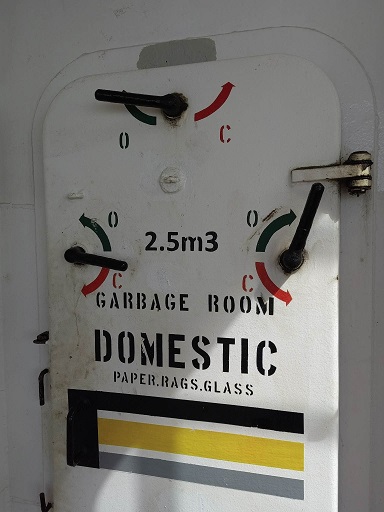 This Annex addresses garbage generated on board ships, including electronic waste and cargo residues, as well as methods to prevent pollution from them. It entered into force on December 31, 1988, and consists of 3 chapters and 14 regulations.
Chapter 1 contains general ANNEX V provisions to the International Convention for the Prevention of Pollution from Ships (MARPOL), consisting of 10 regulations:
-
“Definitions” of various terms used in the chapter in accordance with Regulation 1, and explaining
-
“Application” of this chapter to various types of ships in Regulation 2.
-
Regulation 3 lists the general prohibition on the discharge of garbage into the sea, followed by
-
Regulation 4, concerning the discharge of waste outside Special Areas.
-
Regulation 5 sets special requirements for garbage discharge from fixed and floating platforms.
-
The requirement for waste discharge in a Special Area is established by Regulation 6.
-
Regulations 7 and 8 describe exceptions and requirements for reception facilities, including those within Special Areas.
-
Regulation 9 defines the role of Port State Control regarding control measures for inspection, survey, and evaluation of ships under MARPOL Annex V.
-
Regulation 10 covers the requirement to have a Garbage Management Plan (GMP), including record books and placards.
Chapter 2 is devoted to verification of compliance with the provisions of this convention under Regulations 11 and 12.
Chapter 3 lists important requirements of the International Code for ships operating in polar waters under Regulations 13 and 14:
-
Regulation 13 lists definitions for this Annex, followed by
-
Regulation 14, concerning application and requirements for ships operating in polar waters.
MARPOL Annex VI
Regulations for the Prevention of Air Pollution from Ships (May 2005)
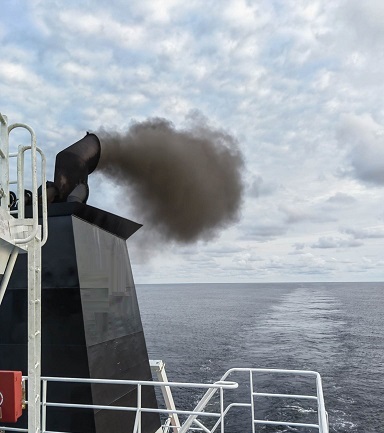 This relatively new Annex details methods to prevent air pollution from ships, both from accidental causes and as a result of routine operations and operational waste. It entered into force on May 19, 2005, and consists of five chapters and 25 regulations.
The regulation introduced limits on nitrogen and sulfur emissions, as well as particulate matter from marine diesel engines with a power output exceeding 130 kW.
Chapter 1 provides a general description of ANNEX VI to the International Convention for the Prevention of Pollution from Ships (MARPOL) and consists of 4 regulations that explain the “Application” of this chapter to various ship types, as well as “Definitions” of various terms used in this chapter. This regulation may not apply to all types of ships; therefore, a separate “Exceptions” and “Exemptions” section is also provided. It also clarifies conditions under which an Administration may permit alternative fittings, materials, appliances, etc., on ships to satisfy the requirements of this Annex.
Chapter 2 lists surveys, certification, and means of controlling air pollution from a ship. It has 7 regulations:
-
Regulation 5 explains the need to conduct various ship surveys to prevent air pollution, after which the International Air Pollution Prevention (IAPP) Certificate and International Energy Efficiency Certificates (IEEC) are issued and endorsed under Regulation 6.
-
Regulation 7 presents details on the issuance or endorsement of certificates by another Party, followed by certificate forms and a statement of compliance regarding fuel oil consumption reporting in Regulation 8 for both IAPP and IEEC.
-
Detailed information on the validity of these certificates is presented in Regulation 9.
-
Regulation 10 defines the authority of Port State Control under Annex VI to inspect a ship for compliance.
-
Regulation 11 explains how the Administration and authorized parties can detect violations and enforce the provisions of this Annex.
Chapter 3 focuses on ship emission control requirements and consists of 7 regulations:
-
Regulation 12 details ozone-depleting substances, such as refrigerants used on ships.
-
Regulation 13 summarizes nitrogen oxides (NOx) of various Tiers (Tier I, II, and III) inside and outside emission control areas.
-
Regulation 14 provides a brief description of sulfur oxides (SOx), indicating the sulfur content allowed in fuel oil by year inside and outside emission control areas.
-
Volatile organic compound emissions from oil tankers are covered in Regulation 15, providing compliance details.
-
Regulation 16 covers shipboard incineration operations.
-
Regulation 17 describes reception facility requirements for the disposal of ozone-depleting substances, exhaust gas cleaning residues, etc.
-
To comply with exhaust gas emission requirements, ships have the option of burning appropriate fuel oil, the criteria for which are described in Regulation 18.
Chapter 4 presents Regulations on Energy Efficiency for ships, containing Regulations 19 through 23:
-
Regulation 19 covers the application of this chapter to ships of 400 gross tonnage and above.
-
Regulations 20 and 21 contain detailed information on the Attained Energy Efficiency Design Index (Attained EEDI) and Required EEDI.
-
Requirements for the Ship Energy Efficiency Management Plan (SEEMP) that must be maintained on board are provided in Regulation 22. Additionally, this regulation lists requirements for fuel oil consumption data collection and reporting to the Administration.
-
Regulation 23 addresses technical cooperation between various parties (Administration, government organization, shipping company, etc.) to improve the energy efficiency of ships.
Chapter 5 is devoted to verification of compliance with the provisions of this convention under Regulations 24 and 25.
Frequently Asked Questions
1. What does MARPOL mean?
The International Convention for the Prevention of Pollution from Ships (MARPOL) is the principal international convention governing matters concerning the marine environment and preserving it from pollution by ships.
2. What are MARPOL regulations?
The International Convention for the Prevention of Pollution from Ships (MARPOL) defines criteria or standards for the stowage, handling, carriage, and transfer of polluting cargoes. It also establishes standards for the safe discharge of shipboard wastes.
3. What is the primary objective of MARPOL?
The primary objective of the International Convention for the Prevention of Pollution from Ships (MARPOL) is to eliminate intentional pollution of the marine environment by hydrocarbons and other toxic substances, and to minimize accidental discharges of such substances.
4. Who is responsible for MARPOL?
The International Maritime Organization (IMO) is the global entity for reporting and regulating pollution matters related to MARPOL.
5. How many technical annexes are contained in MARPOL?
The International Convention for the Prevention of Pollution from Ships (MARPOL) has been amended over time and contains six technical annexes with appendices, as well as specific regulations and guidelines.